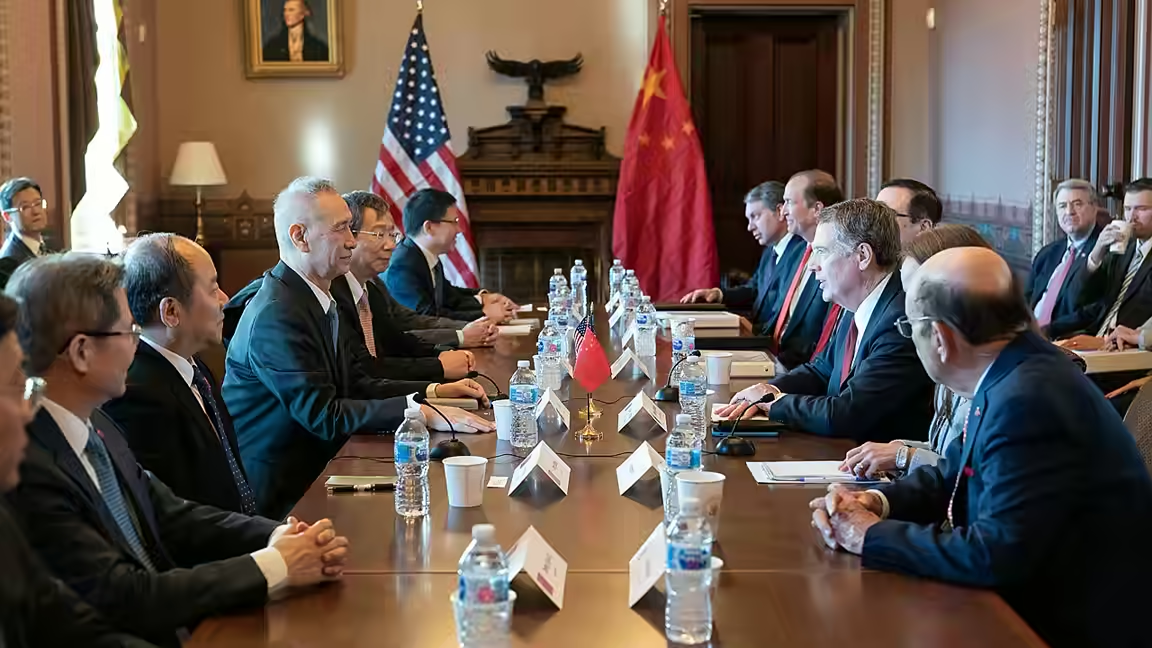
Trump and China trade accusations over tariff truce compliance
The U.S. and China traded fresh accusations on May 30, 2025, after President Donald Trump said Beijing had “totally violated” the tariff truce struck earlier this month and China urged Washington to stop discriminatory restrictions. The exchange raised new doubts about whether the temporary tariff deal in Geneva could hold long enough to open the way to a broader settlement.
According to the AP report, the Geneva agreement had reduced or suspended some of the tariffs the two countries had imposed on each other for 90 days. Trump said on Truth Social that China had broken the deal, though he did not spell out the alleged breach. U.S. Trade Representative Jamieson Greer later told CNBC that China had not been removing non-tariff barriers as promised. Greer also said the U.S. was worried about Chinese countermeasures such as blacklisting some American companies and restricting rare earth magnet exports.
Beijing’s response did not directly address every U.S. complaint, but it said Washington should correct its “erroneous actions” and stop discriminatory restrictions. A spokesman at China’s Washington embassy said Beijing had repeatedly raised concerns about U.S. export controls in the semiconductor sector. That matters because the dispute was not only about tariffs, but also about market access, supply chains and technology restrictions that had become central to the wider trade fight.
The AP report also places the episode in a broader timeline of stalled negotiations. Treasury Secretary Scott Bessent told Fox News that trade talks had become “a bit stalled,” while saying more talks were expected in the coming weeks. He suggested a call between Trump and Chinese President Xi Jinping could eventually be needed. The article also notes that a federal appeals court had temporarily paused a lower court ruling that questioned Trump’s tariff authority, adding another legal layer to the administration’s trade agenda.
For businesses, the immediate worry is that a short-term tariff truce may be too fragile to support planning or investment. The tariffs themselves had been cut sharply under the Geneva understanding, with U.S. levies on Chinese goods dropping from 145% to 30% and China’s retaliatory tariffs on U.S. goods falling from 125% to 10%. But if each side believes the other is slowing compliance, the pause can quickly become unstable.
The event date on this story is May 30, 2025, but the significance reached beyond that day’s statements. The dispute showed that the two biggest economies were still bargaining over not just prices and tariffs, but the structure of access, control and retaliation that defines modern trade competition.


