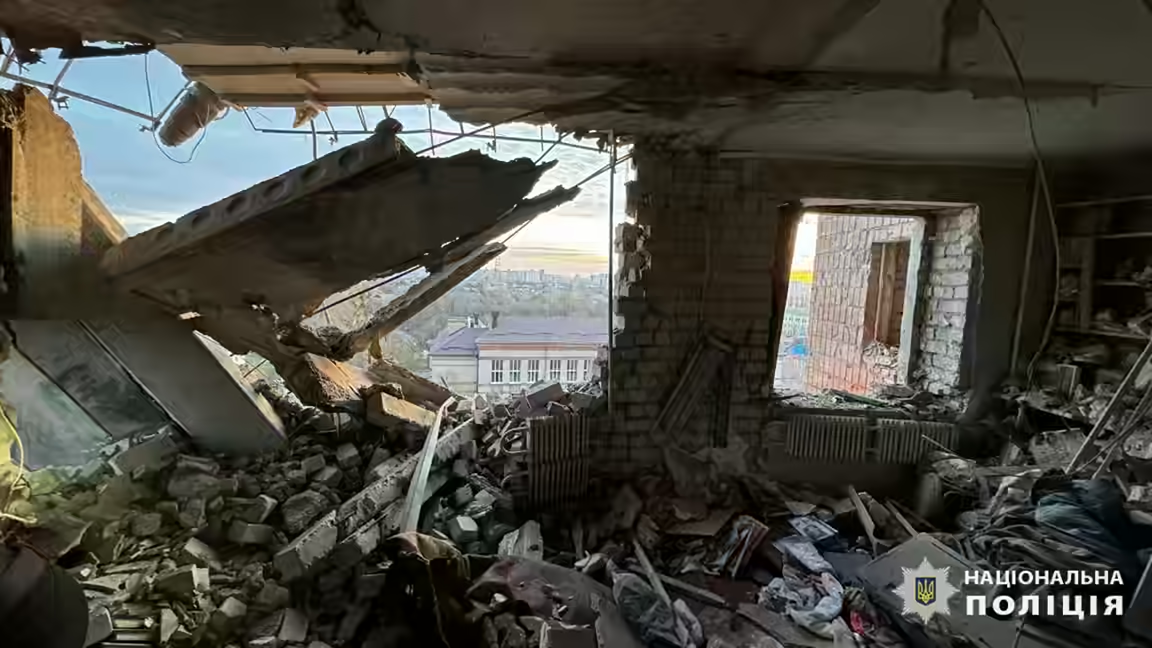
Drone strike on Izhevsk military factory kills three and injures 45, Russian officials say
Event date: 2025-07-01
An attack on a military factory in the Russian city of Izhevsk killed three people and injured 45 others on July 1, 2025, according to Russian authorities cited by the BBC. Officials in Udmurtia later declared a state of emergency after the strike, which hit a plant reported to produce Tor surface-to-air missile systems and radar stations.
Governor Aleksandr Brechalov said six of the injured suffered serious wounds and that he had briefed President Vladimir Putin on the attack. The factory targeted was identified as the Kupol Electromechanical Plant, a site associated with Russian air-defence production. The BBC said a video posted on social media and verified by its newsroom showed an explosion on the roof of a factory building followed by a large plume of black smoke.
The report also said a Ukrainian official confirmed to BBC Ukraine that two long-range drones operated by the Security Service of Ukraine, or SBU, had struck the Kupol plant from about 1,300km away. If accurate, that distance underlined Kyiv's continuing ability to hit military-industrial targets deep inside Russian territory. The BBC noted that Izhevsk is more than 1,000km from the border, making the strike notable not only for its casualties but for its range.
The attack temporarily disrupted civilian air travel as well. Russia's civil aviation regulator, Rosaviatsia, imposed restrictions on operations at Izhevsk airport before lifting them a few hours later. That kind of knock-on effect has become a recurring feature of long-range drone warfare, where attacks on military-linked facilities can also interfere with transport and public services far from the front line.
According to the BBC, this was the second reported Ukrainian drone strike on the Kupol factory since November, though the earlier attack did not produce casualties. The plant's role in producing Tor and Osa air defence systems and in developing drones makes it a strategically relevant target in the wider war. Ukraine has repeatedly sought to degrade Russian military production capacity rather than focusing only on battlefield positions.
The event also unfolded against continuing Russian attacks on Ukraine. The BBC noted that Moscow had launched a record 537 drones and missiles over the previous weekend against sites across Ukraine, including Kyiv and Lviv. That broader context does not change the immediate facts in Izhevsk, but it helps explain why both sides increasingly frame deep strikes as part of a broader campaign to erode each other's military potential.
For residents of Izhevsk, however, the immediate effect was far less strategic: deaths, dozens of injuries, smoke over a factory district and emergency measures across the region. The strike showed that Russia's rear areas remain vulnerable to Ukrainian drone operations, even at distances once thought to place industrial sites well beyond immediate reach.


