US President Donald Trump has announced that imports from Mexico and the European Union will face 30% tariffs from 1 August, according to the BBC report.
The announcement deepened trade tensions with two of the United States’ largest economic partners. The BBC said both the EU and Mexico expressed disappointment and still wanted to keep negotiating, but the threat of tariffs now sits alongside warnings of additional retaliation if either side responds in kind.
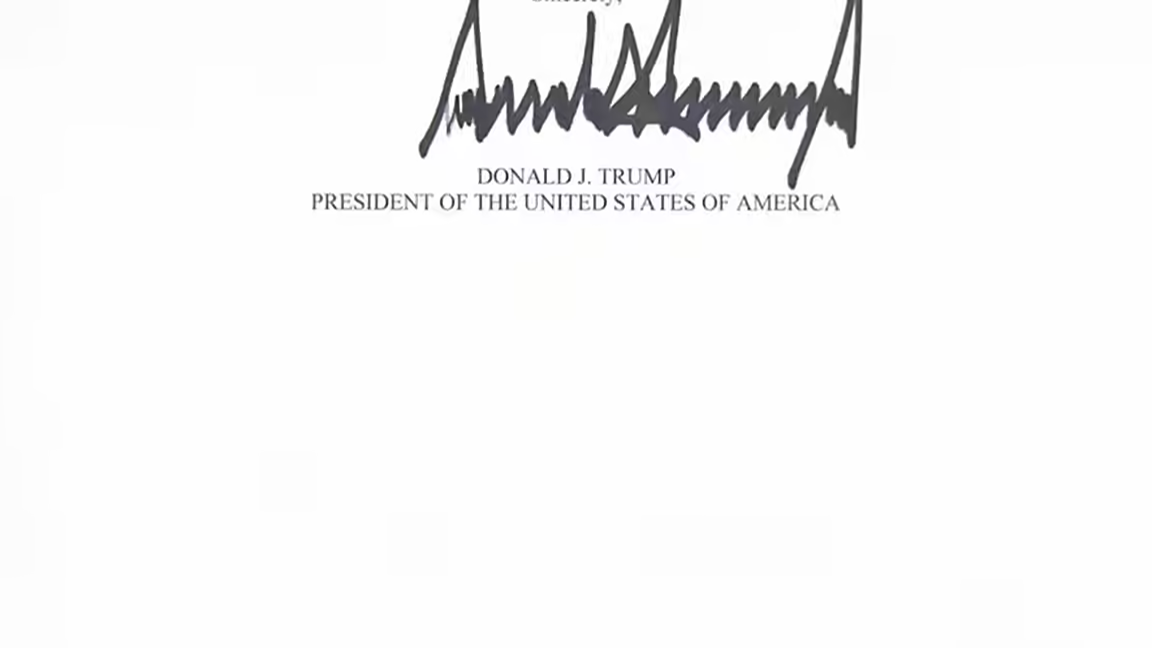
The report said Trump’s letters to European Commission President Ursula von der Leyen and to Mexico’s leadership framed the tariffs as a response to trade deficits and, in Mexico’s case, border and security concerns. The EU said it was ready to keep working toward an agreement by Aug. 1, while warning that it could adopt proportionate countermeasures if needed.
According to the BBC, Trump also said he would add more tariff increases if either partner retaliated. That condition raises the stakes further and suggests the 30% rate may be only the opening number in a broader dispute.
The announcement came after Trump had already targeted other trading partners in the same week, including Japan, South Korea, Canada and Brazil. The BBC report said his administration has now proposed tariff conditions on 24 countries and the EU.
The story also noted that the US trade deficit with the EU reached $235.6 billion in 2024, a figure Trump used to argue that the relationship was not reciprocal. European leaders pushed back, with French President Emmanuel Macron and others signaling that countermeasures were on the table if talks failed.
For now, the move creates a deadline-driven negotiation in which both sides are still talking but the tariff threat is real. The BBC account shows no final resolution, only a sharpened contest over what comes next in transatlantic and North American trade.
The tariff move is also a political test of whether the US can pressure partners without triggering a broader retaliation cycle. The BBC report suggests neither side wants open trade war, but both are preparing language and options that keep that possibility alive. That makes the August 1 deadline more than a date; it becomes a pressure point for markets and negotiators.
The wider list of countries facing tariff conditions shows the move is not limited to Europe or Mexico. By placing the EU and Mexico inside a larger campaign, the Trump administration is using trade policy as a broad bargaining tool, which means the immediate announcement may only be one step in a continuing series of negotiations.
The BBC report also shows how tariff threats can be used as leverage in a negotiation that is still technically ongoing. The letters, the Aug. 1 deadline and the mention of countermeasures all create pressure to produce a deal, but the structure of the announcement keeps uncertainty high. For markets and companies, that uncertainty may matter almost as much as the rate itself.


