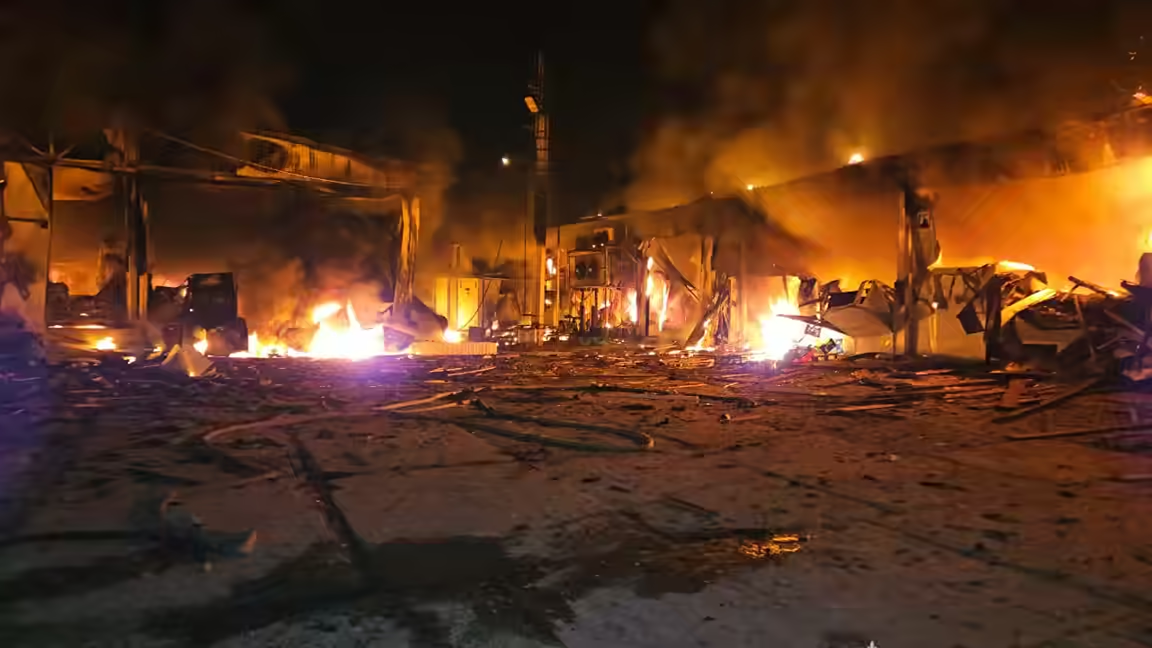
Sochi oil depot fire follows reported Ukrainian drone attack
A major fire at an oil depot near Sochi on Russia’s Black Sea coast was blamed by Moscow on an overnight Ukrainian drone attack, adding another layer to the cross-border energy war that has become a regular feature of the conflict. Russian officials said debris from a drone hit a fuel tank, and firefighters spent hours tackling the blaze before it was extinguished.
The fire’s location made it especially sensitive. Sochi is best known internationally as a resort city and the site of the 2014 Winter Olympics, but the incident showed how Russia’s southern infrastructure remains exposed to long-range drone strikes. The airport near the city briefly suspended flights while the fire burned, disrupting civilian transport as well as fuel storage.
Krasnodar region governor Veniamin Kondratyev said 127 firefighters were involved in the response. Sochi mayor Andrei Proshunin later posted that the blaze had been put out. Russian authorities described the incident as one of several Ukrainian drone strikes across the country over the weekend, saying other sites in Ryazan, Penza and Voronezh were also targeted.
Ukraine did not comment on the Sochi fire. That silence is common in cases where Kyiv’s forces strike inside Russia, especially when the target is energy infrastructure. But the broader pattern is clear: Ukraine has increasingly aimed at oil, fuel and logistics targets deep inside Russian territory in response to Russian bombardment of Ukrainian cities and power systems.
Moscow said its air defences intercepted 93 Ukrainian drones overnight, with 60 over the Black Sea region. It also reported injuries in Voronezh from another drone strike. On the Ukrainian side, authorities said Russia had fired dozens of drones and missiles overnight and that some hit their targets in multiple locations.
The wider exchange of fire underscores a war that now stretches well beyond the front line. Oil depots, airports and bridges have become part of the conflict’s strategic map because they affect mobility, fuel supply and public morale. A fire like the one in Sochi does not just burn fuel; it sends a signal that the rear areas are no longer protected from the war’s consequences.
For Russia, the immediate task was to show control: firefighters mobilised, the blaze extinguished, and air traffic restored. For Ukraine, if it was responsible, the strike would fit a familiar logic of hitting the infrastructure that helps sustain Moscow’s military campaign. Either way, the incident fits the pattern of a war in which the front line is increasingly measured not only in trenches and towns, but also in depots, runways and radar screens.


