# Poland imposes a three-month flight ban in the east after Russian drone incursion
*Event date: 2025-09-11*
Poland has imposed a three-month air restriction across its eastern border region after Russian drones entered Polish airspace, a breach that prompted NATO jets to shoot down the aircraft and raised the temperature on the alliance’s eastern flank. According to Newsweek, the Polish Air Navigation Services Agency, known as PANSA, said the restricted zone would remain in place until midnight on December 9.
The measures apply to a broad stretch of eastern Poland along the borders with Lithuania, Belarus, Ukraine and Slovakia. PANSA said that between sunset and sunrise there would be a total ban on flights in the restricted zone, with an exception for military aircraft. During daylight hours, the zone would still be closed to most traffic, except for manned aircraft that had filed a flight plan and kept a transponder switched on.
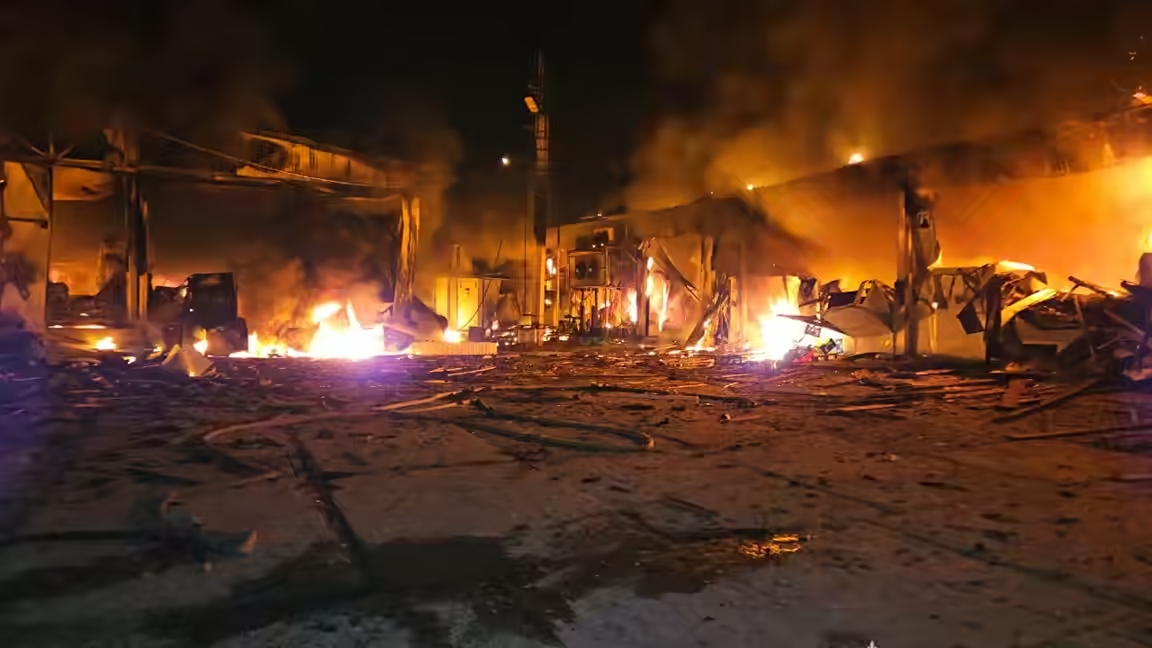
The move came a day after Warsaw said it shot down Russian drones that entered Polish territory during an overnight attack on neighboring Ukraine. Poland’s foreign minister, Radoslaw Sikorski, said the drones had deliberately crossed sovereign airspace. The Newsweek report said this was the first time a NATO member had engaged Russian military assets over its own territory and described the episode as the largest drone breach of NATO airspace so far.
The Russian defense ministry denied planning to strike targets in Poland, and Russia’s charge d’affaires in Warsaw rejected the assertion that the drones were Russian. That dispute over responsibility is central to the political significance of the incident: Poland and its allies say the breach was intentional, while Moscow says its forces did not mean to hit Polish targets.
The airspace restriction shows how quickly the military and civil aviation consequences of the drone incursion have spread. PANSA’s notice was not just a security measure but a practical one, shaping civilian movement, commercial planning and the risk calculations of anyone operating aircraft in the eastern part of the country. The zone also reflects a broader shift in the war’s geography, as drones and missiles launched toward Ukraine increasingly affect bordering NATO states.
Newsweek cited ACLED data saying there had been at least 50 airspace violations across Ukraine’s western border states since the start of the war, though only a handful had occurred in Poland before this incident. It also quoted analysts warning that the expanding use of drones and electronic warfare could increase the risk of direct NATO-Russia confrontation. International Crisis Group analyst Olga Oliker said NATO states may now be less willing to tolerate incursions and more likely to respond, possibly encouraging greater caution from Moscow.
Poland also activated NATO’s Article 4, which allows consultations when a member believes its security is under threat. That step underscores the seriousness of the breach: it is not merely a national aviation issue but a collective security matter inside the alliance.
The practical effect of the new restriction is straightforward. Eastern Poland is now operating under a tighter and more conditional set of flight rules for the next three months, with the military exempted and civilian traffic narrowed sharply. The political effect may be broader. Each new drone incursion carries the possibility of a larger response, and this one has already pushed Poland to harden its airspace and press its allies for consultations.
For now, the country’s eastern skies are being managed as a buffer zone between civilian aviation and an expanding drone war next door. The restriction is temporary in calendar terms, but it reflects a longer-term problem that NATO and its eastern members have increasingly been forced to confront: how to respond when a war in Ukraine begins to spill directly into allied territory.


