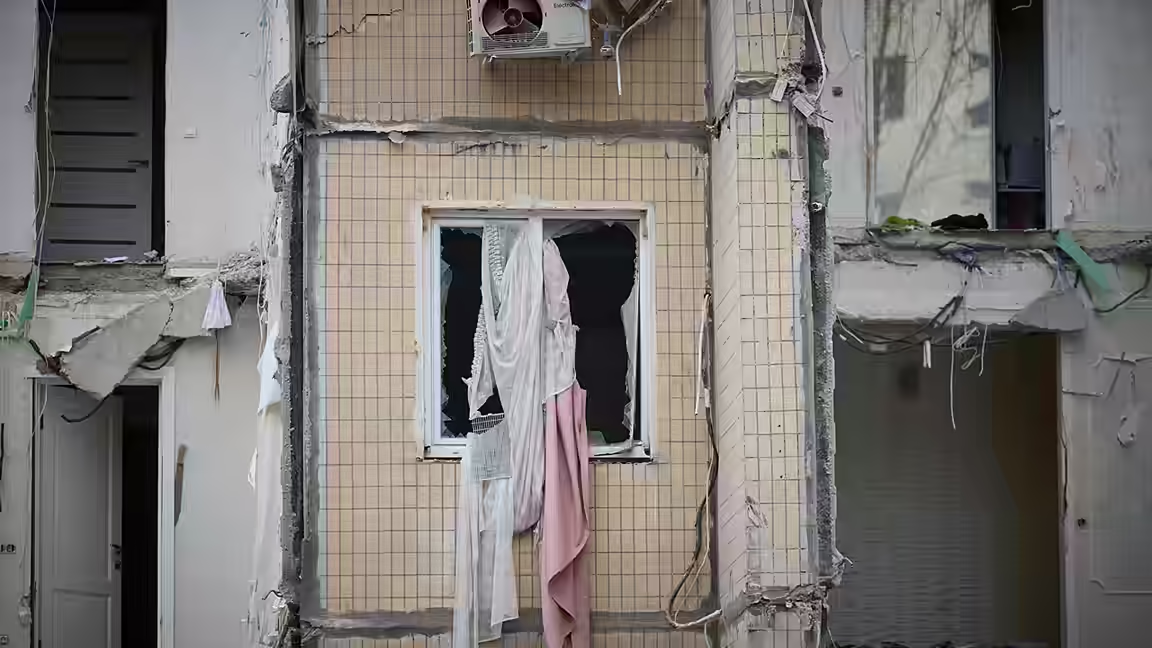
Guyana’s government said it is investigating what it called a terrorist attack on a gas station in Georgetown that killed an 8-year-old girl and injured four other people, two of them seriously. The blast happened late Sunday in the capital and was the third such attack this year.
The AP report says police saw a man planting explosives near propane gas cylinders at a gas station on Regent Street and that he escaped before officers could stop him. The explosion was heard in several districts more than a mile away, which indicates a powerful blast in a dense part of the city. The article should not add any motive, because authorities had not provided one.
President Irfaan Ali called for a full-scale investigation and asked the public to help locate the suspect. That response underscores how seriously the government viewed the attack. The evidence also says the area was cordoned off while investigations continued. Those are the immediate operational facts, and they are enough to explain the official reaction.
This was not the first attack of its kind in Guyana in 2025. The report says there had already been two others, one at a police station and another at a state-owned power plant substation. A man from Guyana had been charged in the substation case, with police accusing him of helping unidentified main suspects. No motive had been provided in either earlier attack.
That broader pattern is what makes the Georgetown blast more alarming than a single criminal incident. The government’s use of the word terrorist attack suggests officials believed the blast was deliberate and politically or socially destabilising, even though they had not yet publicly established a motive. For a news article, the important distinction is between what is known and what is inferred.
The event date of Oct. 26, 2025, therefore marks a violent episode with an unusually clear eyewitness account and a still-open investigative record. A girl was killed, four others were hurt, and the suspect had not been arrested. The blast joined a small but worrying cluster of explosive attacks in Guyana over the course of the year.
The key verified facts are narrow but stark: a man was seen planting explosives near propane cylinders, the explosion killed a child, four others were injured, and investigators were still searching for the suspect. That is the full extent of what the supplied evidence supports.
The fact that the blast was heard more than a mile away suggests why the government treated it as a major security event rather than an ordinary criminal episode. The report also places the attack within a sequence of incidents this year, which can make it harder for authorities to dismiss the danger as isolated. Still, the supplied evidence does not establish a group claim or an identified motive, so the article must keep its language tight and factual.
Until police identify the suspect or a group claims responsibility, the case remains an open investigation into a lethal blast rather than a concluded terrorist plot in the evidentiary sense.


