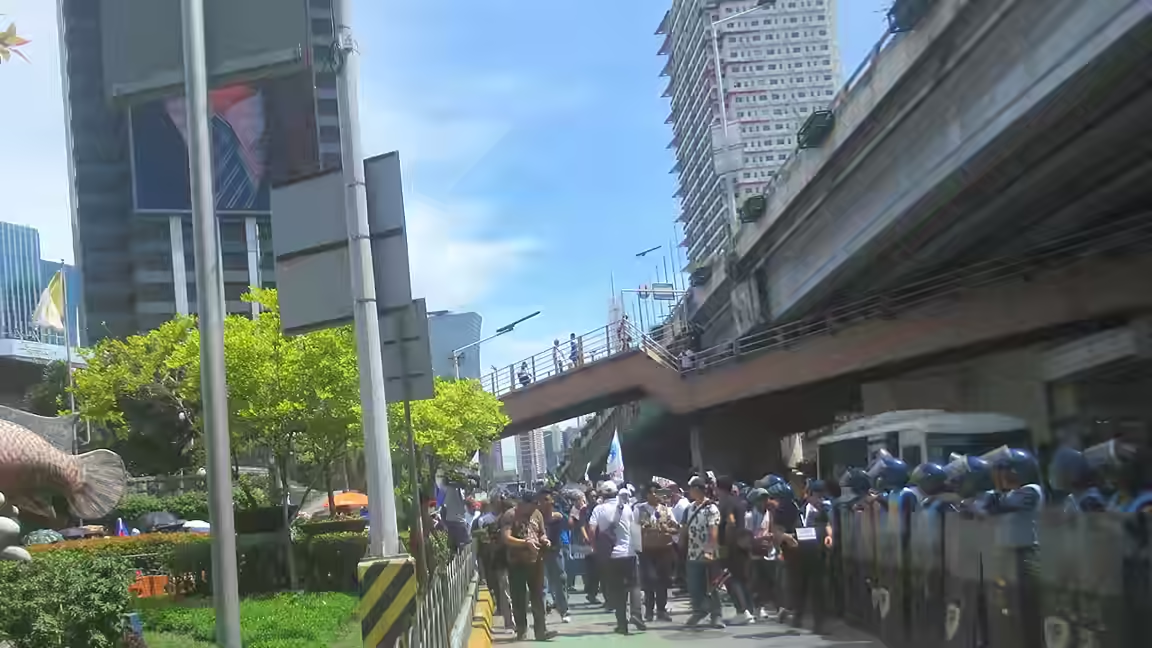
Police in Western Australia are treating an incident in Perth on 2026-01-26 as a potential terrorist act after a man allegedly threw a homemade bomb into a crowd gathered for an Invasion Day rally, according to The Guardian Australia report in the packet.
The explosive device did not detonate, but officials said it was designed to go off on impact. AP-style restraint is important here because the evidence packet only supports the broad facts: a man was arrested, police are investigating, and the object was thrown from a balcony into a crowd at Forrest Place in the Perth CBD.
The report says about 2,500 people were at the rally when the object landed near the stage where elders were addressing the crowd. A 31-year-old man from Warwick was arrested and charged with an unlawful act or omission with intent to harm and with making or possessing explosives under suspicious circumstances. He did not apply for bail.
Authorities have moved quickly because the possible consequences were severe. Police commissioner Col Blanch said the device could have injured or killed many people. Later, WA police, the AFP and ASIO confirmed they were investigating the matter as a potential terrorist attack and said further charges had not been ruled out.
The incident also has a deep political and community impact. Indigenous affairs minister Malarndirri McCarthy called it sickening and said a peaceful rally led by First Nations people could have become a mass-casualty event. Activist and community voices quoted in the report said the attack was traumatic and terrifying, especially because children, elders and organizers were present.
The case now turns on motive, forensic evidence and the joint counter-terrorism investigation. Police say the man is believed to have acted alone at this stage. That may change if investigators uncover a wider network or ideology. For now, the confirmed facts are already serious enough: an explosive device was thrown into a protest crowd, it failed to detonate, and officers are treating the attack as a potential terrorist act.
The community response also matters because the rally was supposed to be a peaceful commemoration and protest, not a security incident. The presence of elders, children and organizers near the stage makes the near-miss especially alarming.
Police said they are still examining motive, ideology and electronic devices, which means the case remains open and potentially broader than one arrest. Even so, the verified facts already justify the serious label: a homemade explosive was thrown into a crowded protest, it failed to detonate, and authorities now believe the incident may amount to terrorism.
The investigation will also test whether police can establish motivation from the device, the suspect’s materials and his electronics. Until then, the incident sits in the category of a near-catastrophe that fortunately did not become one. Even in that limited form, it is a major public safety case because the target was a densely packed protest and the potential for injury or death was immediate.
That is why the incident was so quickly framed as potentially terrorist: the target was a public political gathering, the device was meant to explode, and the crowd included elders and children. The fact that it failed to detonate prevented casualties, but it does not reduce the seriousness of the act. The investigation now has to determine whether the threat was ideologically motivated or something else entirely.
The fact that the man allegedly acted alone does not reduce the seriousness of the incident, but it does frame the early investigative theory. If that assessment changes, police will need to explain whether the attack was part of something larger. For now, the public record is enough: a bomb was thrown, it failed, and the crowd was nearly hit.


