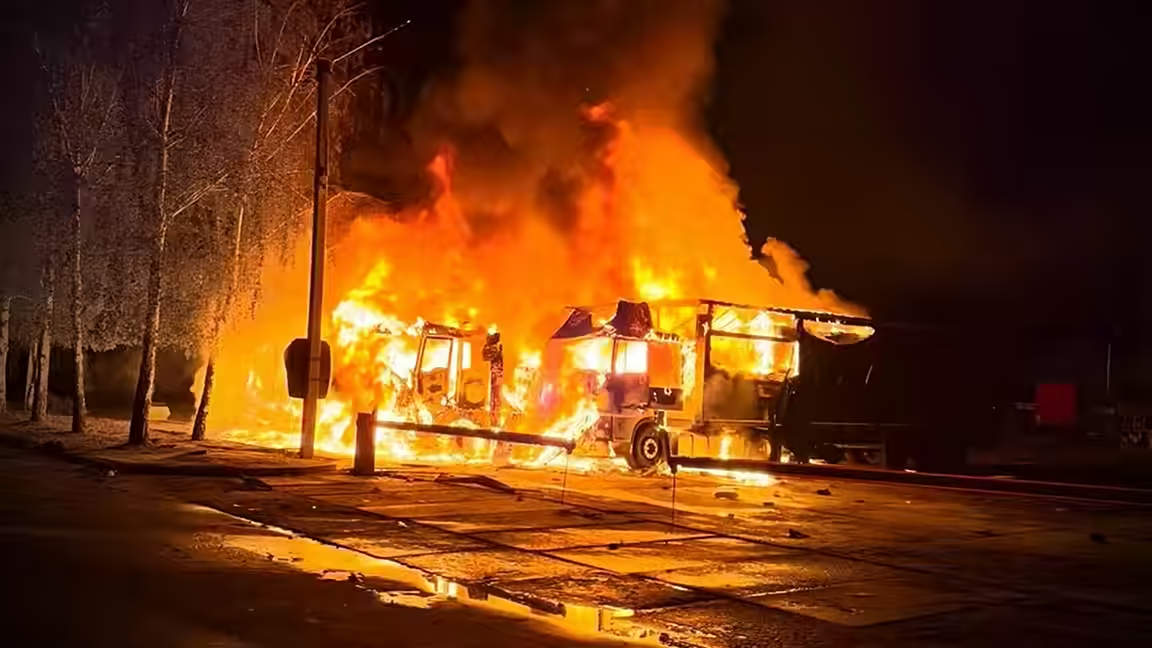
# Ukrainian military says drone strike set Russia’s Volgograd refinery ablaze
*Event date: 2026-02-11*
Ukraine’s military says it carried out an overnight drone strike on Russia’s Volgograd oil refinery, with a fire reported at the site and the extent of the damage still being assessed. The Kyiv Independent, citing Ukraine’s General Staff and Russian regional officials, reported that the attack hit the Lukoil-operated refinery in Volgograd Oblast on February 11 and triggered another high-profile energy infrastructure incident deep inside Russian territory.
The refinery is a strategically important target because fuel and refining capacity sit at the center of any sustained war effort. According to the report, Ukraine’s General Staff said the site was hit directly, while Volgograd Oblast Governor Andrey Bocharov acknowledged damage at a facility in southern Volgograd. Those parallel statements matter because they do not fully agree on the framing, but together they support the core fact that an industrial site tied to oil processing was affected.
Russia’s Defence Ministry said it had shot down 48 Ukrainian drones in several regions, though not over Volgograd Oblast itself. That omission stands out because it leaves room for the reported refinery strike even within Moscow’s broader claim of successful air defenses. Bocharov also said an apartment building and a kindergarten were damaged and that there were no casualties, adding that emergency services were working to locate and dispose of possible drone debris. The packet does not independently verify those local damage claims, but they show the reported strike had effects beyond the refinery complex itself.
Volgograd lies hundreds of kilometers from Ukrainian-controlled territory, making attacks there notable as a measure of range and planning. The source says the refinery had not been struck earlier in the year, though authorities in the same region reported a separate drone-related fire at an oil facility in January. That pattern fits a wider Ukrainian strategy of targeting fuel, logistics and air-defense assets rather than limiting operations to immediate front-line areas.
The evidence packet does not establish how much production capacity was disrupted or how quickly the facility could resume normal operations. It also does not include satellite verification or company comment from Lukoil. Still, the supported news is significant on its own terms: Ukraine says it hit one of Russia’s major refineries, Russian officials admit damage at a regional facility, and the attack highlights the continued expansion of long-range strikes against energy infrastructure tied to the war.


