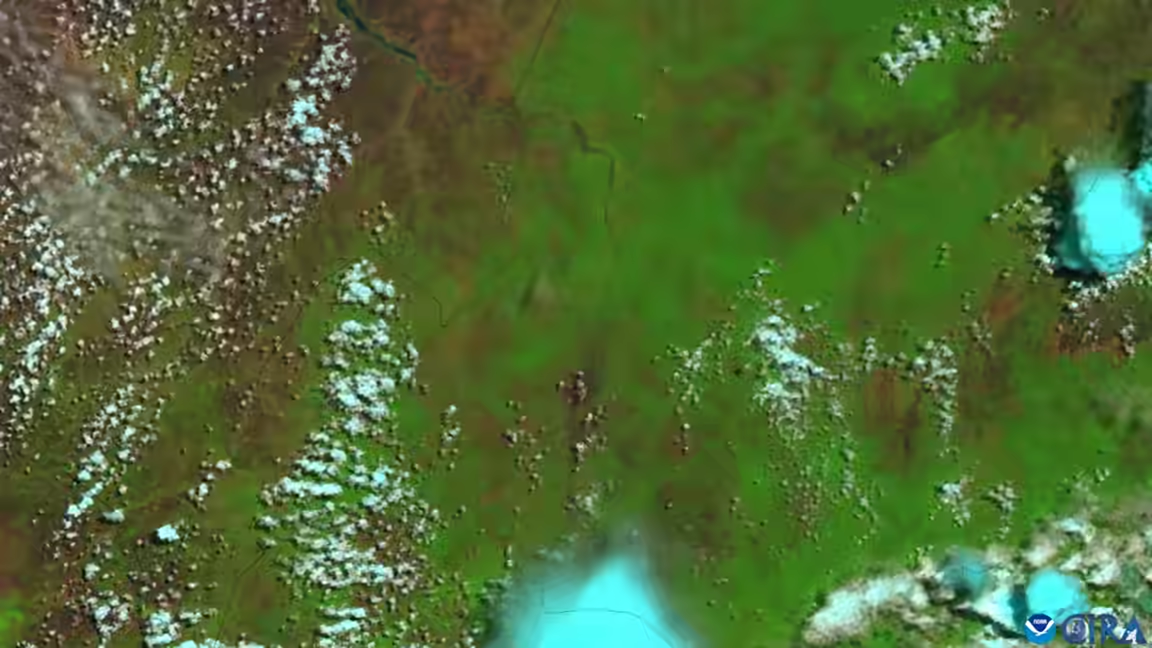
At least 100 people were killed on the event date in clashes in Shawira, in Ethiopia’s Central Gondar Zone, according to ACLED’s March 2026 Africa overview. The conflict-monitoring group describes the fighting as one of the deadliest events in the month and places it within a broader resurgence of violence in northern Ethiopia.
The excerpt says the Amhara Fano National Movement clashed repeatedly with Ethiopian National Defence Force units and allied forces during the month, and that Shawira was among the areas affected. ACLED’s summary says the town was taken over on 22 February and that the fighting there caused heavy fatalities on both sides. The packet does not provide a more precise breakdown of who died, and it does not identify the dead by unit or civilian status.
The broader context matters. ACLED says tensions in northern Ethiopia had risen in early February as rival forces in Tigray, Afar and nearby areas repositioned, prompting fears that the region was moving closer to open war again after the end of the northern Ethiopian conflict in November 2022. The overview also points to ongoing clashes elsewhere in Amhara, underscoring that Shawira was not an isolated episode.
The evidence packet does not include a separate local report from the day of the fighting, so the best-supported account here is the ACLED summary itself. It is a secondary source, but one that is specifically designed to track political violence and map incident-level trends. On that basis, the verified reporting is that clashes in Shawira produced at least 100 fatalities and fit into a wider pattern of escalating armed confrontation in Amhara.
The excerpt also notes a buildup of armed activity involving the ENDF, TDF and Eritrean forces in northern Ethiopia earlier in the month, which contributed to the atmosphere of instability. That does not explain every local clash, but it does show how the violence in Shawira belonged to a larger and worsening security picture.
Because the packet offers no first-person accounts or on-the-ground casualty audit, the toll should be treated as a minimum rather than a final figure. What can be stated confidently is that the event was deadly, large in scale, and part of one of Ethiopia’s most unsettled conflict zones.
ACLED’s account also suggests that the Shawira fighting was not an isolated flash point but part of a broader contest over control, mobility and local authority across Amhara. The same overview points to airstrikes, militia maneuvers and repeated clashes in nearby areas, which means the deadliness in Shawira sits inside a wider pattern of armed pressure rather than a single local dispute.
The important editorial constraint here is to treat ACLED as a conflict monitor, not a firsthand battlefield report. That still allows a confident minimum: at least 100 people died in Shawira on the event date, and the event belonged to a month in which northern Ethiopia was trending toward renewed war. Any more precise claim about the balance of fighters and civilians would go beyond what the packet supports.
The ACLED excerpt also indicates how much the conflict has widened geographically. Fighting in Shawira came alongside mobilization in Tigray, Afar and other parts of Amhara, which helps explain why a single local clash could end up with such a high death toll.
Because this is a monitoring report, the safest framing is to treat the casualty figure as a documented minimum from a conflict-data source. The evidence is enough to show extreme lethality and rising instability.


