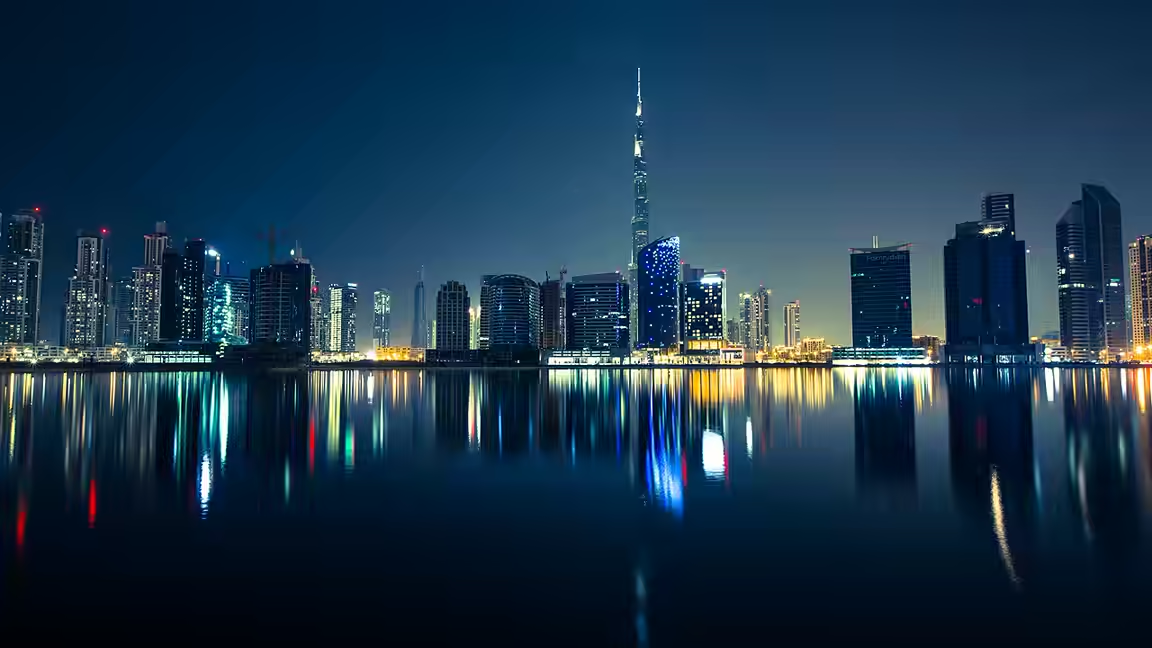
Dubai’s skyline and transport network were thrown into crisis after Iran said it had struck targets in the United Arab Emirates. Explosions, air-defence activity and reported hotel fires were followed by civilian injuries, evacuations and airport suspensions.
Explosions were heard across the city during the afternoon and evening. Residents described windows shaking and saw missiles or interceptors crossing the sky. Emergency crews responded to an incident at Palm Jumeirah, where four people were injured, while smoke and fire were reported around major hospitality landmarks. Authorities initially stopped short of saying whether the Palm incident had been caused by a direct strike or by falling debris from an interception.
The violence formed part of Iran’s response to joint American and Israeli attacks on Tehran earlier that day. Iran said it had targeted sites in Dubai and Abu Dhabi associated with US military activity. The UAE hosts American forces at Al Dhafra Air Base near Abu Dhabi, while Dubai’s Jebel Ali port is used by US Navy vessels.
Landmarks evacuated as emergency teams respond
The Burj Khalifa was reportedly evacuated as a precaution; the supplied evidence contains no direct UAE authority confirmation of that evacuation. There was no confirmed direct hit on the tower, but its height and central location made falling debris a particular concern while interceptions continued overhead. The evacuation was a striking sign that a city built around dense high-rise districts, tourism and international business could no longer assume that regional warfare would remain distant.
Media reports identified the burning property as Fairmont The Palm; Dubai authorities confirmed only an incident in Palm Jumeirah, four injuries and a controlled fire, without publicly establishing the cause in the supplied evidence. Later reporting also described damage at the Burj Al Arab. One report, citing Reuters, attributed that damage to an Iranian drone, but the available official information did not establish the precise weapon or sequence of impacts. The distinction matters in an environment where direct strikes, intercepted projectiles and falling fragments can produce similar scenes on the ground.
The UAE’s Ministry of Defence separately said missile debris fell in a residential area of Abu Dhabi, killing one civilian of Asian nationality. It condemned the attack as a dangerous escalation that threatened civilians and regional stability. The casualty in Abu Dhabi demonstrated that even successful interceptions could leave communities below exposed to lethal debris.
Aviation disruption spreads beyond the UAE
Flights at Dubai International Airport and Al Maktoum International Airport were suspended as regional airspace restrictions expanded. Qatar, Bahrain and Kuwait also imposed restrictions, disrupting routes that connect Asia, Europe and Africa through Gulf hubs. Dubai’s airports normally sit at the centre of a network that moves passengers, high-value cargo and workers across continents, making even a short closure consequential far beyond the city.
Later coverage of the widening conflict described airport closures, interrupted port operations and a decline in airline shares in Asia-Pacific markets. Doha’s Hamad International Airport was also halted, while reported attacks around shipping routes near the Strait of Hormuz added pressure to trade and energy markets. Global oil prices rose as the security crisis spread to vessels and ports.
The disruption exposed the economic model of Gulf cities that have spent decades diversifying beyond hydrocarbons. Dubai, Abu Dhabi and Doha rely heavily on aviation, tourism, logistics, finance and expatriate labour. Damage around Dubai Marina and Palm Jumeirah therefore carried both a human cost and a warning for sectors whose appeal depends on safety, reliable travel and uninterrupted services.
A wider exchange across the Gulf
The UAE was not the only Gulf state affected. Missiles were reported over Doha, Riyadh and Manama, while Bahrain said the area around the US Navy’s Fifth Fleet headquarters was targeted. Qatar reported intercepting incoming missiles without casualties. Elsewhere, residents were evacuated from districts near military facilities as sirens and explosions spread across capitals more accustomed to watching regional conflicts from a distance.
The attacks came after US and Israeli forces struck Iran. Iran’s retaliation was directed at Israel and what it described as US-linked targets across the Gulf. That geography placed American partners in a difficult position: they maintain close defence relationships with Washington while several have also pursued cautious diplomatic engagement with Tehran.
For residents, the immediate official guidance was to remain indoors, follow local authorities and avoid circulating unverified claims. That warning reflected the speed at which dramatic videos and conflicting accounts appeared online. Images of fires at globally recognisable buildings travelled rapidly, but early reports did not always distinguish between a building being directly targeted and being damaged by intercepted weapons or debris.
The longer shadow over a global hub
The events of February 28 challenged Dubai’s reputation as a stable international refuge. Its airports, luxury hotels and landmark towers are not simply symbols; they are essential parts of the city’s economic infrastructure. The temporary loss of normal operations showed how quickly conflict can interrupt tourism, trade and daily life even when military installations appear to be the stated targets.
Later reporting indicated that fighting continued and widened over the following days, with casualties elsewhere in the region and further disruption to aviation and shipping. Those later developments should not be confused with what was known during the initial Dubai emergency, when officials were still assessing damage and the causes of individual incidents.
What was clear on the event date was that civilians had been injured, a civilian had been killed in Abu Dhabi by missile debris, prominent Dubai properties had been damaged, and one of the world’s most important aviation centres had been forced to stop. The attacks turned the Gulf’s commercial infrastructure into an immediate measure of the conflict’s reach—and made the costs of escalation visible far beyond military bases.


