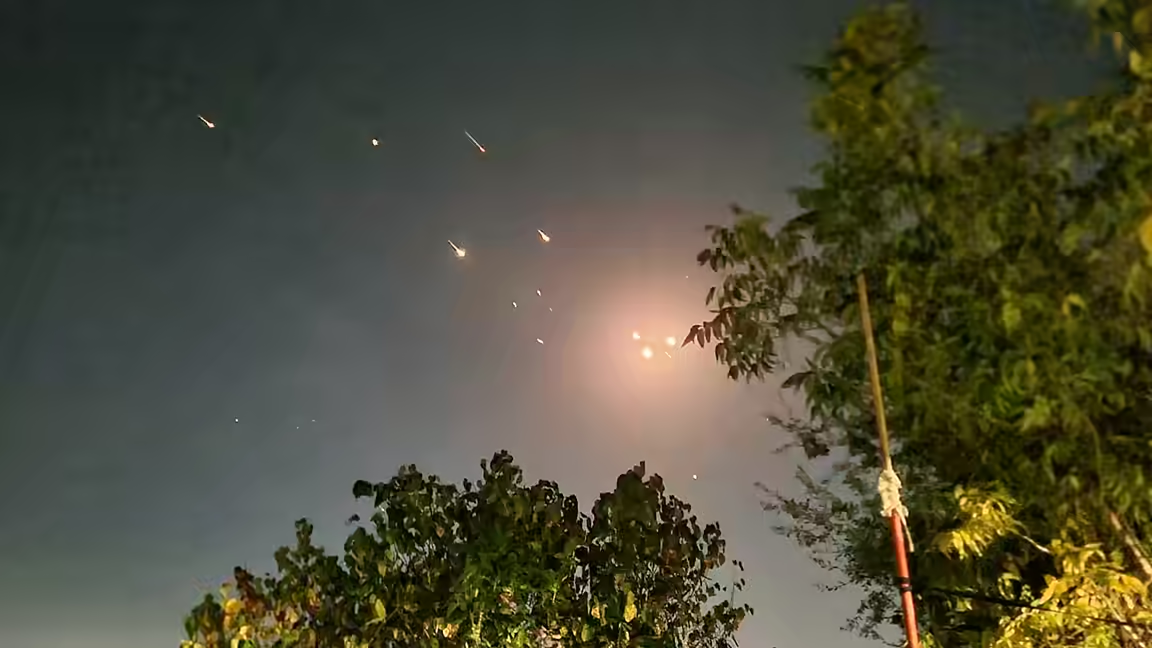
Qatar said on Thursday that it came under attack from 14 ballistic missiles and four drones fired from Iran, but that all of the drones and 13 of the missiles were intercepted and no casualties were reported. One missile fell into Qatari territorial waters, the defence ministry said, as explosions were heard over Doha and authorities raised an emergency alert for residents.
The strikes pushed the Gulf deeper into a regional war that had already spread beyond Iran and Israel to countries hosting U.S. military assets. Qatar’s interior ministry ordered people living near the U.S. Embassy in Doha to evacuate as a precaution, while Al Jazeera reported that the embassy compound sits in the heart of the city. The concern was not only the missiles themselves but the possibility of escalation around facilities linked to Washington.
The Qatari report came alongside other damage across the region. In the United Arab Emirates, falling debris from intercepted drones injured six people in Abu Dhabi, according to the emirate’s media office. Bahrain said it had destroyed dozens of missiles and drones targeting the kingdom. Saudi Arabia and Oman also reported interceptions or damage, while Kuwait said an oil tanker outside its territorial waters had taken on water after an explosion and that an oil spill could create environmental damage.
Iran’s Revolutionary Guard said it had launched 230 drones at facilities hosting U.S. troops in several countries, including Iraq and Kuwait. President Masoud Pezeshkian said Iran had sought diplomacy but had been left with no choice but to retaliate, while foreign ministry spokesman Esmaeil Baghaei warned that European Union countries would pay a price if they remained silent. Oman, for its part, called for an immediate ceasefire and a return to regional diplomacy.
For Qatar, the immediate result was a successful interception and no known casualties, but the wider meaning was harder to ignore. A country that often positions itself as a mediator and regional host suddenly found itself naming missile counts and drone interceptions. In a war already spilling across airspace and sea lanes, the Doha strike showed just how close the conflict had moved to civilian capitals across the Gulf.
The broader barrage also highlighted how quickly the war had spread from the core belligerents to countries that have tried to keep some distance from the fighting. Qatar’s role as a regional mediator made the attack especially sensitive, because it is not simply another Gulf state reacting to cross-border fire. It is also a place where diplomats, military planners and foreign officials have often met to talk through crises. A missile strike in or near Doha therefore carries symbolic weight well beyond the intercept figures, because it suggests that mediation itself is now unfolding under threat.


