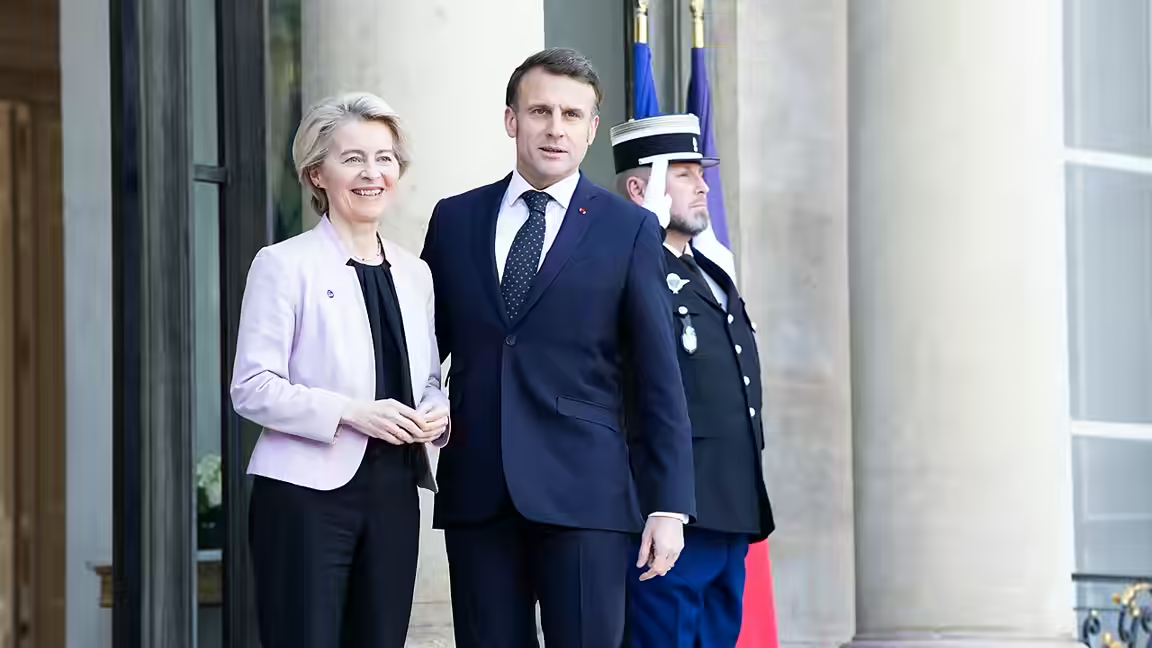
French President Emmanuel Macron said France and other countries were preparing a purely defensive naval escort mission for merchant shipping through the Strait of Hormuz. The supplied Al Jazeera report says the purpose would be to help reopen the key Gulf waterway once the most intense phase of the war on Iran ends, and that the plan would involve both European and non-European partners.
That statement matters because it shows France trying to move from political reaction to maritime planning. Macron was not announcing an active combat deployment in the strait. He was describing a protective escort role for container ships and tankers, and he framed it explicitly as defensive. In a crisis where shipping insurance, oil prices and military signaling all move together, that wording is deliberate.
The route is important because the Strait of Hormuz carries about 20 percent of the world's oil supply, according to the report. When the war has effectively shut down that passage, even talk of escorting merchant vessels becomes a market event. The French president also said his country would deploy eight warships, two helicopter carriers and the nuclear-powered aircraft carrier Charles de Gaulle to the Eastern Mediterranean and wider Middle East region, calling the move unprecedented.
The Iranian reaction was equally sharp. Ali Larijani, a top security official, said security in the strait was unlikely to be restored while the war ignited by the United States and Israel continued. He also dismissed plans drawn up by parties that had supported the conflict. That exchange makes clear that maritime security in Hormuz is now bound to broader military escalation, not just to shipping rules.
The report says France's objective was to contribute to regional de-escalation and guarantee freedom of navigation. It also says Greece, the UK and other countries had sent military assets to Cyprus after an Iranian-made drone attack on a British base there. Those deployments suggest the wider Eastern Mediterranean was already becoming part of the same security picture.
At the same time, oil markets were reacting fast. The report says G7 finance ministers discussed possible responses in Brussels, including the potential release of emergency stockpiles. Brent crude had risen sharply as the war and the closure of the strait put pressure on supply expectations. In that context, Macron's escort mission was not just a naval idea. It was part of a wider attempt to reassure markets that commercial shipping would eventually move again.
The verified bottom line is simple: France is preparing a defensive maritime escort framework for Hormuz, and it is doing so in a war environment where the security of the strait has become a central geopolitical and economic question.


