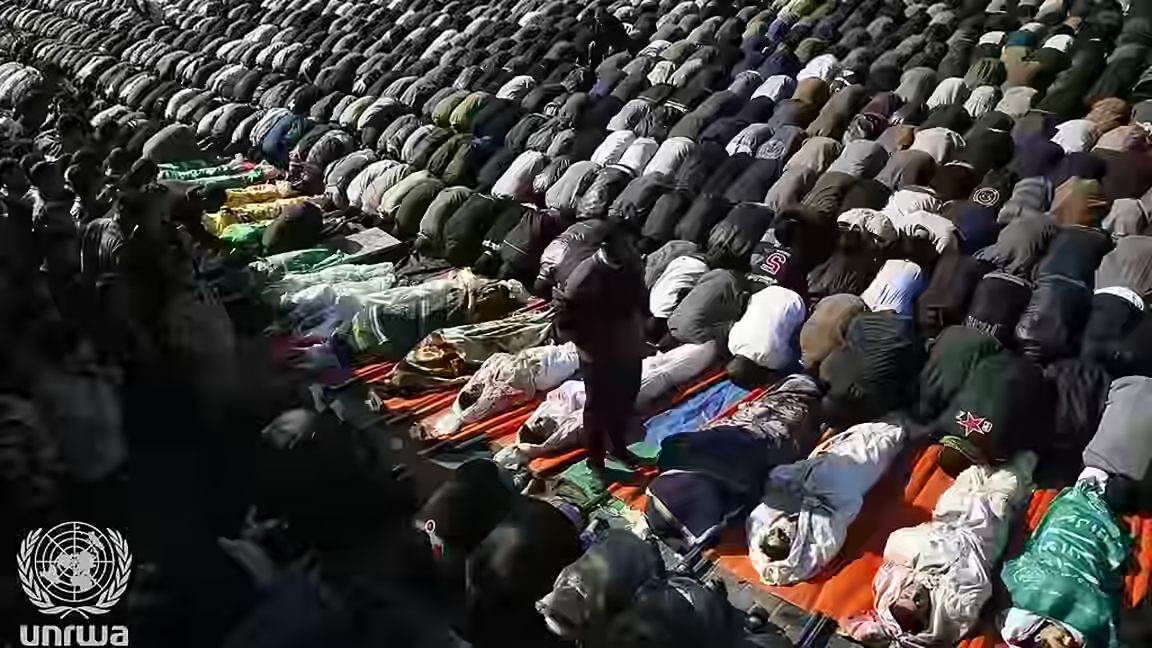
Seven people were killed and 23 injured in Israeli strikes in Lebanon's Bekaa Valley, with five more hurt in a nearby village, according to the BBC live coverage cited in the evidence for 2026-03-11.
The report says the seven deaths and 18 of the injuries occurred in Temnine Et Tahta, about 45 kilometers east of Beirut, while five others were injured in an attack on Ali al-Nahri. That makes the Bekaa Valley the day's main casualty site in the Lebanese segment of the conflict.
The BBC live page also says the Israeli military issued evacuation warnings for six villages in southern Lebanon and told residents to move north of the Litani River, linking the strikes to a broader ground-and-air campaign. The article does not supply the military's operational claims beyond that warning, so it avoids speculating on targets or intent.
In conflict reporting, casualty counts from local health authorities are often the first reliable numbers available. Here, the state-run National News Agency cited the health ministry, which gives the toll official weight even if later updates refine it. The article therefore keeps the numbers as reported rather than trying to reconcile them with any later or conflicting count.
The location details matter. Temnine Et Tahta and Ali al-Nahri are both in a heavily affected region where strikes have repeatedly damaged homes and forced civilians to move. The report does not identify military targets or give a battle assessment, but it does show that the violence was not confined to a single isolated point.
The event date marks another deadly day in southern and eastern Lebanon, with the Bekaa Valley bearing the immediate human cost. Seven dead, 23 injured and evacuation orders for more villages is enough to establish the scale of the day's strikes.
Evacuation warnings for six villages add another layer to the Lebanese strikes because they suggest the military campaign extended beyond the specific casualties already reported. The BBC live update does not give enough detail to say which targets were intended, so the article avoids guessing. What can be verified is that civilians were told to move north of the Litani River and that the Bekaa Valley saw the day's toll.
The casualty numbers are enough to show that the strikes were not symbolic. Seven dead and 23 injured is a substantial toll even before any later revision. The report therefore reads as a snapshot of a still-moving conflict day: local authorities counting casualties, the military issuing evacuation orders and the wider situation remaining active across more than one part of Lebanon.
Live updates in conflict zones often move faster than full verification can keep up. That is why this article keeps to the reported tolls and evacuation order rather than pretending the battlefield picture is settled. The numbers are still severe on their own: seven dead, 23 injured and another village reporting five more wounded in a separate strike.
Because the report is a live update, it necessarily leaves some battlefield questions unresolved. That does not reduce the seriousness of the toll. It just means the article has to stay anchored to what was actually reported: the Bekaa Valley deaths, the nearby injuries and the evacuation warning that came with them.


