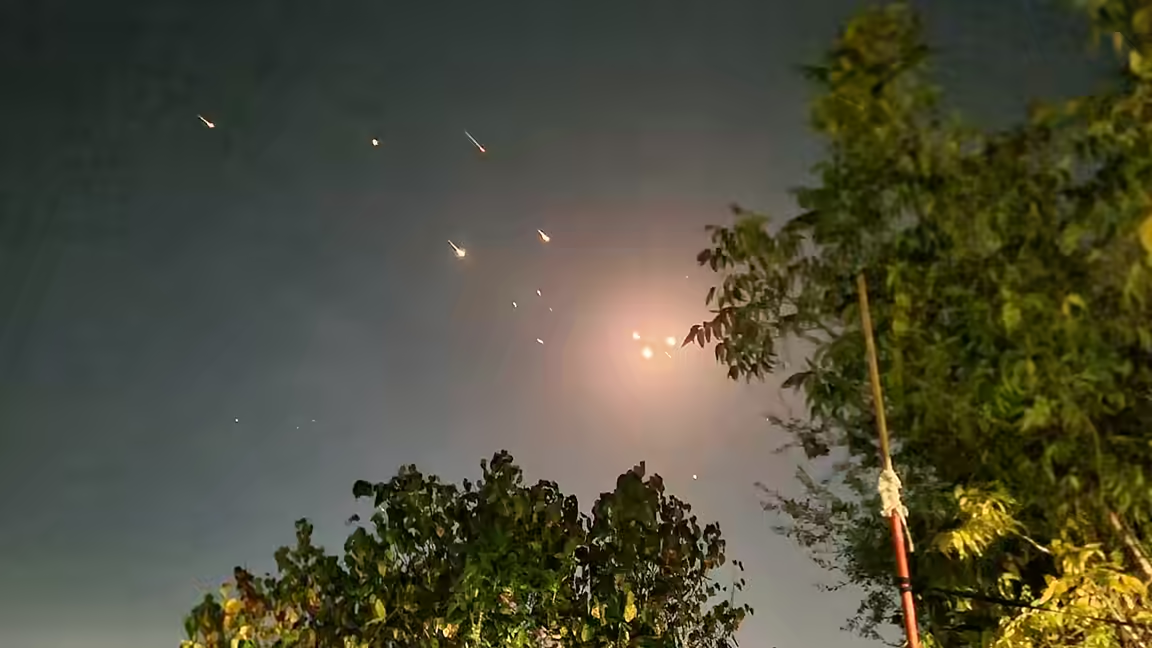
Saudi Arabia said its air defenses intercepted and destroyed two ballistic missiles and seven drones on Thursday, describing a multi-target attack that reached toward one of the kingdom's eastern energy corridors and a major air base. The defense ministry's spokesman, Maj. Gen. Turki Al Malki, said one missile was launched toward the Eastern Province, another toward Prince Sultan Air Base, and the drones were aimed at the Shaybah Oil Field in the Rub' Al Khali desert.
The official statement matters because it points to more than one kind of target. The Eastern Province is where the kingdom's population, industrial activity and oil infrastructure overlap. Prince Sultan Air Base is a strategic military site, while Shaybah is one of Saudi Arabia's important energy assets deep in the desert. Naming all three in a single announcement suggests the weapons were part of a coordinated salvo rather than a random intrusion.
The ministry said the projectiles were intercepted and destroyed, but the packet did not identify who launched them or whether anything fell after interception. It also did not mention casualties or damage, which means the public account remains limited to the defense action itself. The statement is therefore a claim of successful interception, not a full damage assessment.
Even with those limits, the target list gives the incident strategic weight. Missiles aimed at a province, an air base and an oil field indicate pressure on both military readiness and energy security. Shaybah's inclusion is especially notable because it shows that the desert does not make the field invulnerable; in a region where drone and missile strikes are often used to send political messages, energy infrastructure is a recurring pressure point.
The ministry's announcement also fits a familiar pattern in Gulf security reporting: authorities tend to release a terse operational summary first, then leave the deeper questions unanswered. That leaves observers with the same basic facts every time - what was intercepted, where it was headed and how many projectiles were involved - but not yet the reason the attack happened or who planned it. In this case, Saudi Arabia's message was clear. The weapons were stopped before impact, but the attempt itself showed how wide the circle of possible targets has become.
The report leaves the immediate facts clear but the deeper questions open. In these cases, officials are describing a strike, a detention, a seizure or a recovery before the legal or forensic process has finished. That means the public can see the outline of the event, but not yet the final chain of responsibility, the full damage assessment or, in some cases, whether the case will become a prosecution at all.
For readers, that distinction matters. A blast that caused no injuries, a drone that hit a warehouse, or a cache seized in a rural raid all sit at different points on the spectrum of violence, yet the response usually starts the same way: police, soldiers or investigators move first and explain later. The packet consistently shows that pattern, and it also shows how quickly security incidents become political statements when governments frame interceptions, arrests or raids as proof of readiness.
The next reporting step will be to see whether follow-up statements, court filings or damage assessments add anything concrete. Until then, the source material supports a narrow but clear account of what happened, who said what and what remains unproven.


