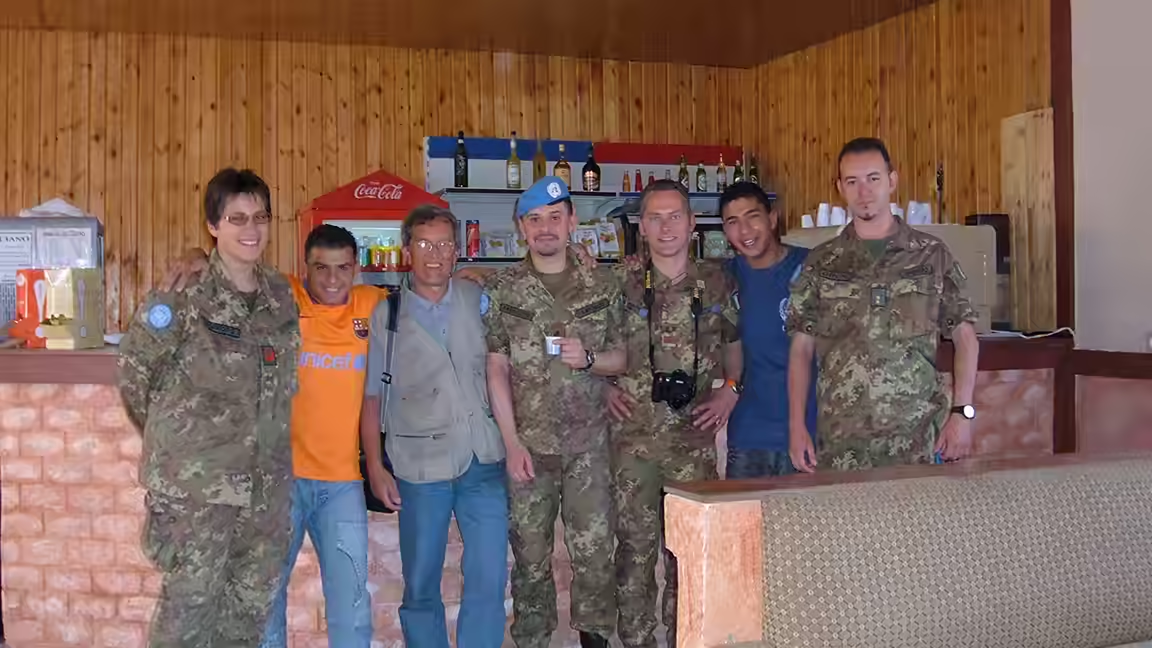
Italian forces in the Gulf and the wider Middle East have remained in place but under pressure as tensions rise, according to ANSA.
The report says debris from a Hezbollah rocket, intercepted by Israeli systems, fell in the area of the Unifil base in Shama in Lebanon, where Italian soldiers were stationed. None were seriously hurt, although one soldier reported eye pain and was checked by medics. Later that evening, a drone hit a hotel in Baghdad where Italian personnel were staying, though they were unharmed and moved to bunker safety. Those incidents show how quickly the security environment has deteriorated around Italian deployments.
The story also says the Italian defense minister, Guido Crosetto, has been in constant contact with military leaders to monitor the situation. That is to be expected when troops are spread across multiple mission areas and the risk profile is changing by the hour. The packet says 1,300 Italian soldiers operate in Lebanon at Shama, Al Mansouri and Naqoura, and that evacuation planning would depend on United Nations approval.
That detail is important because it shows the current posture is not a retreat but a contingency-heavy hold. A ship is reportedly ready in case transfer orders are issued. At the same time, the article says Italy has repositioned more than 400 soldiers across Qatar, Bahrain, Iraq and Kuwait as conditions change. That suggests a disciplined adjustment to risk rather than a wholesale withdrawal.
The source also notes that Italy continues to play multiple roles in the region, including support for local security forces in Lebanon and command of the Aspides naval mission in the Red Sea. The Rizzo frigate is said to be off Yemen escorting European merchant traffic, while other vessels remain assigned to anti-piracy or regional patrol roles. Those missions underline how deeply involved Italy remains even as front-line danger rises.
What is not happening, according to the evidence, is a blanket pullout. The article says there is no withdrawal and that the Italian presence remains a message to host countries that operations will continue at full capacity once conditions stabilize. That language matters because it draws a line between temporary relocation and strategic abandonment.
The source also suggests the UN Security Council may decide the future of Unifil around June, with possible options ranging from new rules of engagement to an early end. That would have major implications for Italian personnel, since Lebanon is described as the front with the widest range of possible outcomes.
The key takeaway is that Italy is managing a network of missions under increasing strain. Soldiers have not been removed en masse, but movements, bunker precautions and evacuation planning show that commanders are treating the Gulf and Levant as an active risk zone. The incidents in Lebanon and Baghdad are the immediate evidence of that pressure.
For now, Italy is holding its ground, monitoring the situation and preparing for more changes if the regional crisis deepens.


