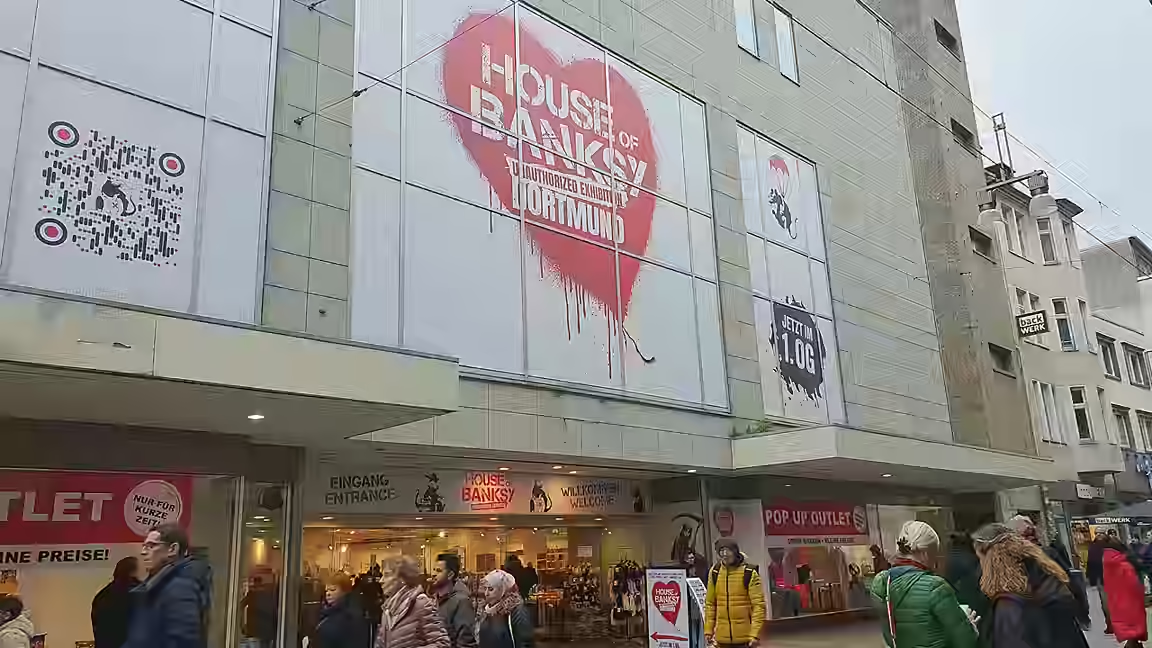
A new investigation into Banksy's identity says the anonymous artist is Robin Gunningham, a Bristol-born man who later adopted a different name, according to reporting supplied for the event date of 2026-03-17.
The key claim in the supplied ABC News summary is that Reuters combined court files, public records, photos and other material to identify Banksy as a man born in Bristol. The investigation is described as having located New York court records tied to a 2000 vandalism arrest and used them to connect the artist to a later identity change. The report says the new name is one of the most common men's names in the United Kingdom, and that it was used to travel and preserve the Banksy persona.
That alone would make the story notable. Banksy is not a marginal figure whose identity matters only to art-world specialists. The supplied reporting frames him as one of the most influential and commercially valuable artists of the past two decades. His stencilled works have generated tens of millions of dollars in sales. His anonymity has helped make the persona part of the art itself, turning the hidden author into a core part of the message and the market.
The ABC summary also emphasizes why the question has endured. Banksy has long been treated as a cultural enigma, and the artist's refusal to speak publicly has become part of the mythology around the work. The report says insiders, experts and people close to the artist have stayed silent, often because of loyalty, non-disclosure agreements or the influence of Pest Control, the company that authenticates his work and controls access to new pieces. That context explains why a documentary-style investigation matters: the secrecy is not incidental, but central.
The Reuters reporting, as summarized here, does more than name a person. It also describes how the investigation was done, using photos, records and a handwritten confession tied to a long-ago disorderly conduct charge. The ABC excerpt says that document reveals Banksy's true identity beyond dispute. It also says Reuters presented its findings to the man it identified, but he did not respond. Banksy's company said the artist had decided to say nothing. His long-time lawyer neither confirmed nor denied the claim and argued that publication would violate privacy, interfere with the art and create risk.
The legal and ethical debate is part of the story. The lawyer's response, as quoted in the supplied excerpt, argues that anonymity can protect creative freedom and shield artists from retaliation or censorship. Reuters, however, concluded that the public interest in the identity of a figure with such wide cultural influence outweighed the privacy claim. That tension explains why the report is likely to be discussed well beyond the art press.
There is also a broader political layer. The supplied reporting notes that Banksy has long used public walls, including in conflict zones and on protected buildings, to make political statements. His anonymity makes those interventions more potent because the message appears to come from nowhere and everywhere at once. Naming the artist, if accepted, changes the frame for understanding the work, even if it does not change the work itself.
The event date for this story is 2026-03-17.
![Titre uniforme : Charpentier, Marc Antoine (1643-1704). Compositeur. [Les arts florissants. H 487] Divertissement en 5 scènes. - Date de composition : 1685-1686. - Parties des…](/media/articles/commons-b1096973dc25.avif)