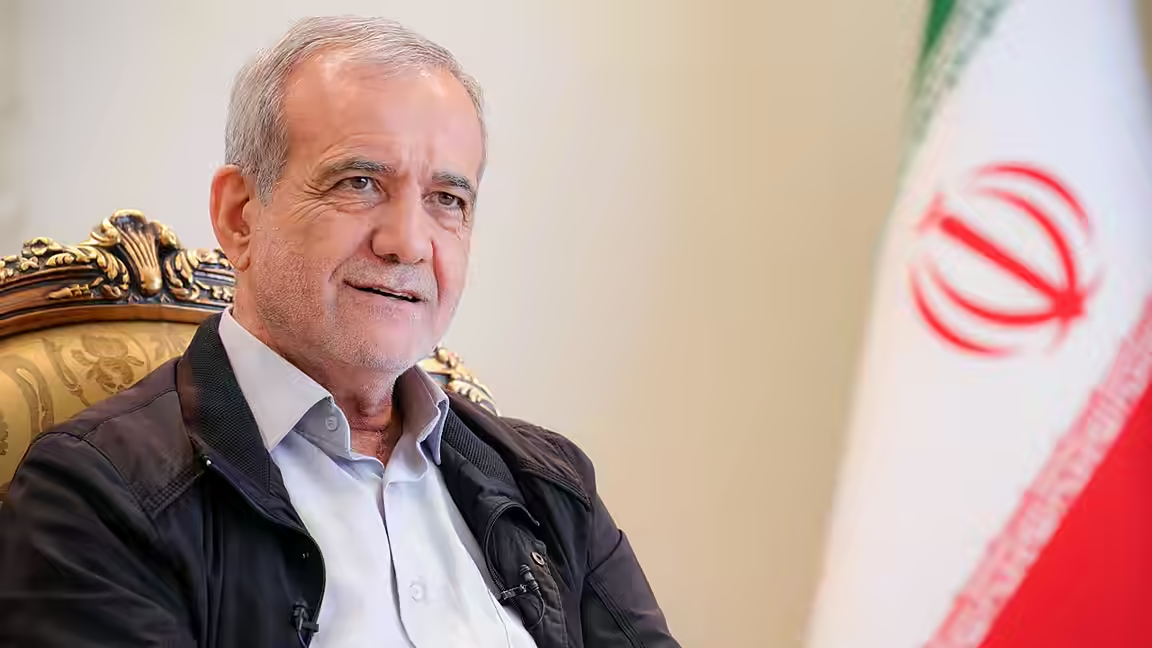
Iranian President Masoud Pezeshkian said Iran has the necessary will to end the war with the United States and Israel if essential conditions are met, including guarantees that prevent a repeat of the attacks.
RFE/RL reported that Pezeshkian made the remarks in a phone call with European Council President Antonio Costa. He said Iran possessed the willingness to end the conflict, but only if the conditions were in place to keep the violence from starting again. His office also said the solution to normalizing the situation is the cessation of aggressive attacks.
The comments matter because they suggest a possible softening in tone after days of hard-line messaging from Tehran. The source says some observers do not see Pezeshkian as the real power broker inside Iran’s system, but his words still moved markets in the United States and pushed oil prices down. That shows how closely investors are parsing even partial shifts in rhetoric.
At the same time, the source says the diplomatic picture remains unsettled. The United States has put forward a 15-point plan that would include dismantling Iran’s nuclear facilities, limiting missile capabilities and ending support for regional proxy forces. Senior Iranian officials have denied that Tehran is in formal negotiations with Washington, but Iran also said on March 25 that it was reviewing the U.S. proposal and had its own conditions for ending the war.
Iran’s foreign minister, Abbas Araghchi, told Al Jazeera that he continues to receive messages from U.S. special envoy Steve Witkoff, but that does not mean negotiations are taking place. That kind of language is consistent with the source’s wider theme: public denials, indirect contacts and continuing uncertainty about who is actually empowered to make a deal.
The U.S. side is also projecting mixed signals. President Donald Trump has said several times that a deal to end the war was nearing, while Defense Secretary Pete Hegseth said the coming days would be decisive and that Washington preferred to reach a peace agreement rather than continue military action. The source says U.S. forces are still building in the region, so diplomatic optimism is unfolding alongside military pressure.
The most important takeaway from the report is not that peace has been achieved, but that one senior Iranian leader has openly said Iran would end the war if it can be assured the attacks will not resume. That is not a settlement, but it is a sign that the language of negotiation has not disappeared from the conflict.
The report ends with no clear sign of a breakthrough, but it does show that the diplomatic language has not collapsed entirely. Pezeshkian's comments, the U.S. proposal, the indirect messages reported by Iran's foreign minister and the coordination talk from China and Pakistan all point to a conflict in which negotiation is still possible, even if the core disputes over nuclear limits, regional leverage and future security guarantees remain unresolved.


