On April 9, 2026, Ukraine’s Coordinating Headquarters for the Treatment of Prisoners of War said that the bodies of 1,000 deceased people had been returned as part of ongoing repatriation efforts.
The headquarters said the remains were returned to Ukraine and that, according to the Russian side, they may belong to Ukrainian servicemen. That leaves a crucial distinction unresolved: the return has taken place, but the formal identification of each body still needs to be completed before families can be notified and burials arranged.
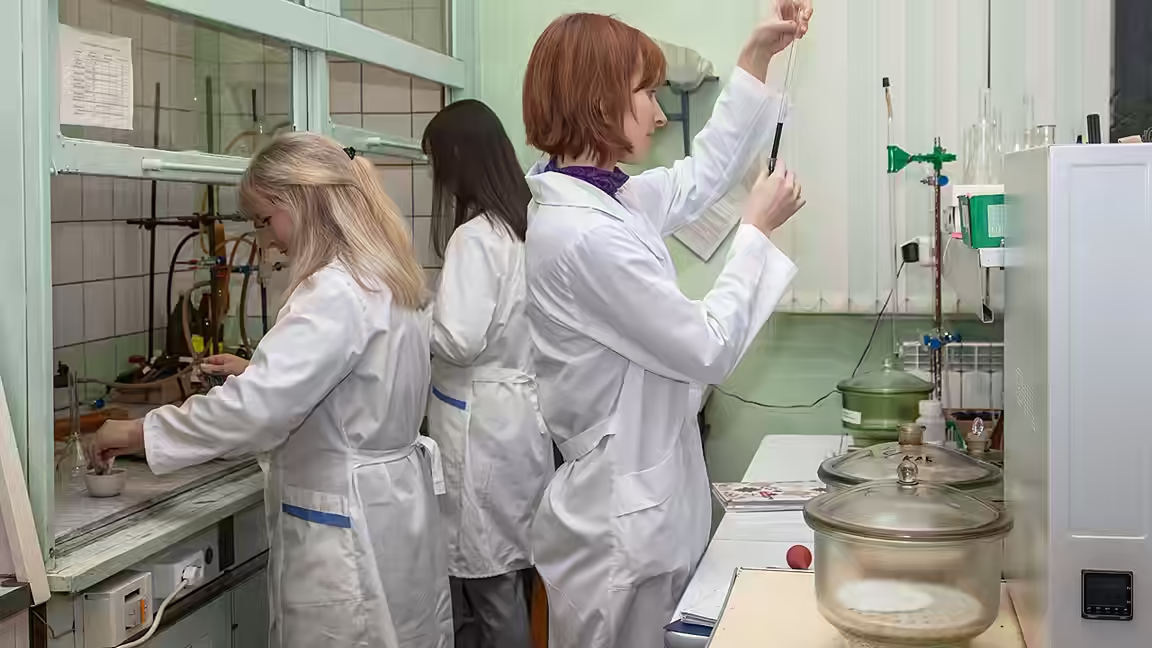
The supplied evidence says law enforcement investigators and experts from the Ministry of Internal Affairs will conduct the necessary examinations. In practice, that means DNA testing, record matching and other forensic work will now determine which of the returned remains can be identified and handed over to relatives.
The scale of the transfer makes it one of the larger repatriation efforts described in the packet. It also shows how the machinery around prisoner and casualty exchanges continues to function even amid the broader war. These are not politically dramatic moves in the way battlefield developments are, but they are deeply significant for families and for the states involved.
The headquarters said the exchange was made possible through coordination among multiple Ukrainian institutions, including the Security Service of Ukraine, the armed forces, the interior ministry and other bodies in the security sector. It also thanked the International Committee of the Red Cross for assistance.
That detail suggests a wide administrative effort behind what can look, from the outside, like a single transaction. Repatriation of bodies in wartime usually depends on transport, authentication, and coordination across more than one agency, and the supplied report reflects that broader process.
The evidence does not specify where the bodies came from, how long the process took, or whether the exchange was reciprocal. It also does not provide any Russian statement beyond the reported attribution that the remains may belong to Ukrainian servicemen. What it does establish is that the bodies have been returned and identification is now the next step.
For Ukraine, the return is both a logistical and human matter. The immediate task is forensic, but the end point is familiar and painful: names, confirmation, and dignified burial. The scale of the transfer shows that, even as the war continues, the state apparatus is still working to bring the dead home.
The identification process will likely take time, especially when the remains are described only as those of deceased persons returned from the Russian side. For families, that waiting period is often the hardest part, because formal certainty depends on forensic confirmation rather than on the transfer itself.
The report does not say how the handover was organized across the border, and it avoids the kind of battlefield detail that might turn a humanitarian update into a military one. That restraint leaves the story focused where it belongs: on the repatriation process, the institutions involved and the practical step of returning names to bodies.
The supplied evidence is enough to support the core fact, but not enough to settle every tactical or diplomatic question around it. That is why the story stays with what can be verified: the statement itself, the setting, and the broader implication for the conflict.


