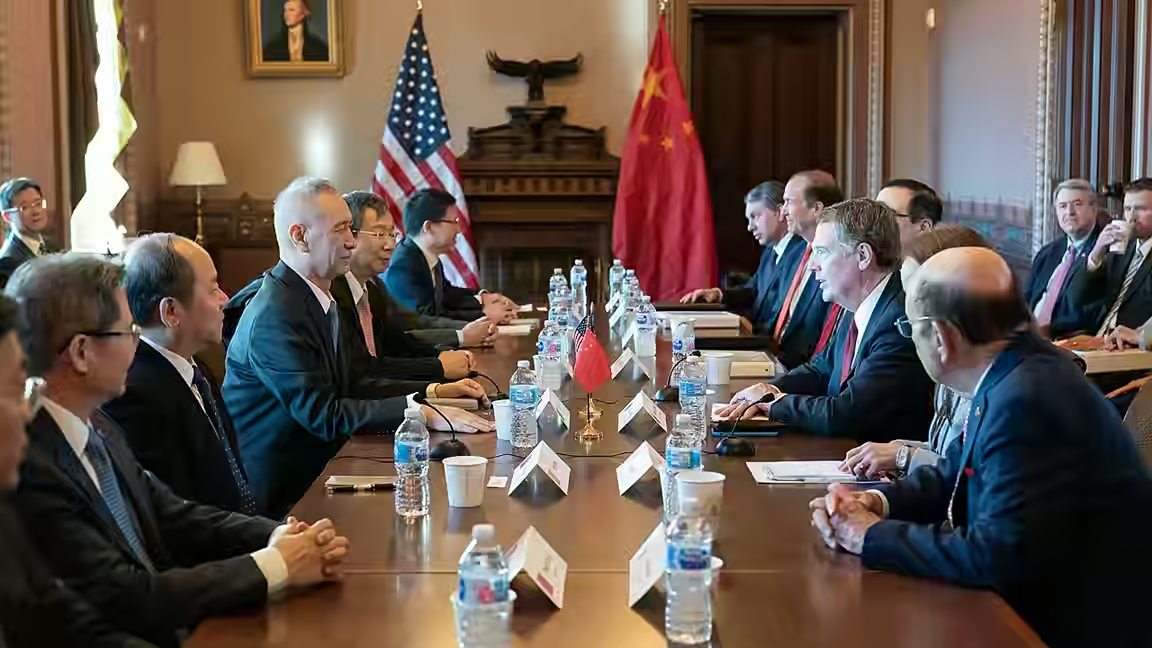
# Vance says Iran talks ended without deal after 21 hours in Pakistan
*Event date: 2026-04-12*
The United States and Iran ended 21 hours of talks in Pakistan on April 12, 2026, without reaching a deal to end the war, according to NBC News. Vice President JD Vance said the delegation left the table with what he called Washington’s “final and best offer.”
The talks had been framed as a serious diplomatic push. But the evidence packet shows that, by the end of the session, there was still no agreement on the central issue: how to end the conflict in a way both sides could accept. Vance said the two delegations had made some progress in discussion, but not enough to bridge the gap.
He also said the U.S. position was clear. Washington had set out its red lines, explained what it could and could not accommodate, and pressed Iran for a firmer commitment that it would not pursue a nuclear weapon. That is the core policy issue Vance highlighted in the excerpt, and the one he said remained unresolved.
Iranian officials offered a similar picture of deadlock. A spokesperson for the foreign ministry said there was no expectation in Tehran that a deal would emerge from a single meeting, especially in the middle of the war. He added that there had been common ground on some issues but significant differences on several key topics, including the Strait of Hormuz and nuclear technology.
The packet also shows that the Pakistani government wanted the process to continue. Foreign Minister Ishaq Dar urged both sides to keep to the ceasefire and maintain the “positive spirit” of the talks, saying Pakistan would continue to facilitate engagement between the two countries. That gives the meeting an important diplomatic frame: host-country mediation, but no breakthrough.
For Vance, the message was both procedural and political. He said he had been in constant communication with Trump throughout the talks and that the president had urged him to make his best effort to get a deal. Vance said the team did that but left with no headway.
The significance is not just that the talks failed. It is that the failure came after a very long negotiating session, one described by Iranian officials as the longest single meeting with the United States in the past year. The duration suggests both urgency and difficulty: the parties spent the time, but not the trust, needed to finish the job.
The immediate result was stalemate. The broader implication is that the war remained unresolved, diplomacy remained active, and both sides left Islamabad still defining the conflict through their own red lines rather than through shared terms.


