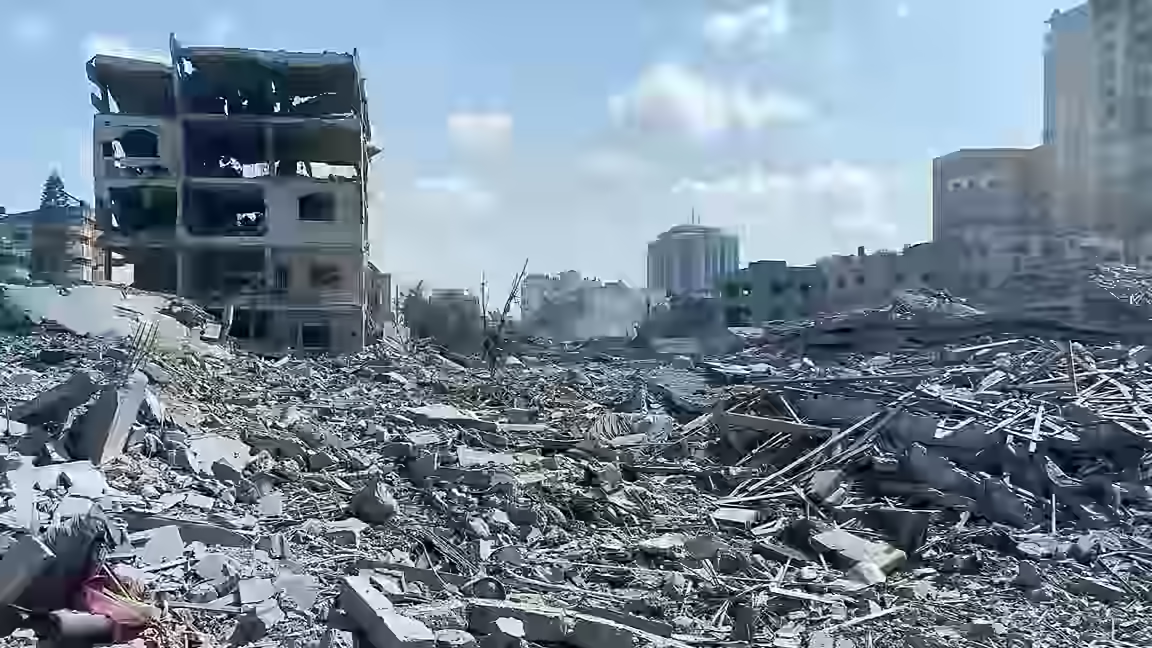
Russian overnight strikes on Odesa killed a married couple and wounded 15 people on April 24, 2026, according to the Kyiv Independent. The attack hit residential buildings in the southern Ukrainian port city, turning another night of routine warning alerts into a deadly episode for civilians who have lived for years with the risk of drones and missiles.
The details in the report are stark even without a longer casualty list. Two people were killed, the outlet said, and the victims were a married couple. Another 15 people were injured. That means the immediate toll reached beyond a single apartment block or one neighborhood. It touched families, neighbors and first responders who were forced to deal with the consequences of an attack that landed where people were sleeping, not on a military target announced in advance.
Odesa has repeatedly been targeted since Russia launched its full-scale invasion, and each strike has left local authorities and emergency crews racing to check damaged buildings and find anyone trapped inside. In this case, the phrase "residential buildings" matters because it shows the attack was not confined to a battlefield or a port installation. The human cost fell directly on a civilian area, where a married couple became the latest known fatalities from a war that continues to puncture everyday life in Ukraine's south.
The Kyiv Independent's report gives a limited but important snapshot of the attack: the location, the casualties and the fact that the buildings were residential. That is enough to show why these strikes still command attention. Odesa is not an abstract front line. It is a city with homes, streets and people who must wake up to assess damage after each overnight barrage. When a report like this says two people died and 15 were wounded, it is describing a fast-moving event that emergency teams must absorb in minutes and families must live with for much longer.
Even with few details beyond the casualty count, the incident fits a pattern that has defined Russian attacks on Ukrainian cities. Civilian housing remains vulnerable, and the distinction between military pressure and civilian suffering is often thin on the ground. The report from Odesa does not offer a broader military rationale, but it does capture the scale of the harm in the way war stories often do: a short list of facts that leaves the larger fear in plain view.
The reporting also fits a broader pattern in which strikes on Odesa ripple far beyond the immediate casualty count. The port city remains both strategically important and densely civilian, so every overnight attack forces local authorities to switch from ordinary urban management to emergency response. Even when a report is this short, the human meaning is clear: people were at home, the strike landed there, and rescue teams had to work through the consequences before sunrise.
It also shows how quickly civilian areas become the front line in a war fought with drones and missiles. Odesa's role as a port city means it is strategically important, but that does not lessen the human cost when strikes hit apartments and streets. The report's casualty count captures the damage, while the residential setting explains why the attack was so unsettling.


