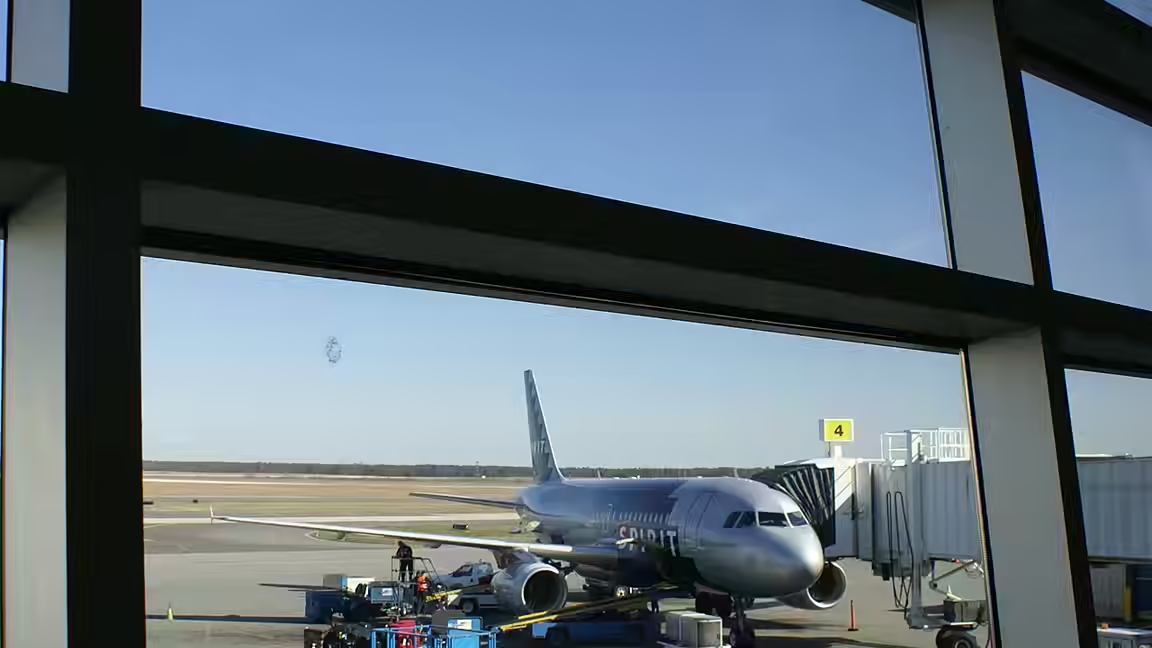
# Flights resume at Bamako airport after a 24-hour security suspension
Flights resumed at Modibo Keita International Airport in Bamako on Sunday after a temporary suspension that followed coordinated attacks in several Malian cities, including the capital, according to a report citing the country's transport ministry.
The source says the ministry announced that airport operations restarted on April 26, 2026, at 6:00 a.m. sharp. The suspension had lasted 24 hours and was taken as a security measure after attacks the previous day. The first flights to and from Malian regional destinations were then handled successfully that morning, the report said.
The airport is described in the source as fully secure, with passengers moving through all checks before boarding under the strict control of the authorities through the Minister of Transport and Infrastructure. The reporting also says passengers were calm and confident, though that detail is secondary to the official message: the airport had reopened and operations had resumed.
That sequence matters because transport disruptions often become one of the first visible signs that security conditions have worsened. In this case, authorities chose a brief shutdown rather than a longer closure, suggesting an effort to contain the operational impact of the attacks while restoring normal air traffic quickly. The evidence packet does not give further detail on the attacks themselves, so any broader account of who carried them out or how extensive they were would go beyond what is supported here.
Even so, the airport reopening is a concrete indicator that the state was moving to reassert control over a key piece of infrastructure. Airports are not only travel hubs; they are also sensitive sites for logistics, commerce and government signaling. When operations resume after a suspension, the timing and wording of the announcement become part of the message to the public as much as the flights themselves.
The report also places the airport decision in the context of a wider day of violence across Mali. The attacks on Saturday, April 25, led to flight suspensions in Bamako, but by the next morning the ministry said the disruption was over and the airport was functioning again. That was enough for the first scheduled movements to be processed normally, according to the source.
The precise scope of the security response is not described in the packet, but the wording of the ministry's announcement indicates an emphasis on passenger and staff safety. A 24-hour halt is short by aviation standards, but it is long enough to indicate a serious concern at the time the measure was taken.
For travelers and airlines, the immediate takeaway was that Bamako's main airport had returned to service quickly. For officials, the reopening was a public demonstration that the country could still keep essential infrastructure running after a day of attacks. The evidence does not show whether further security measures remained in place beyond the airport perimeter, so that question remains open.
What the source does establish is simple and important: after a temporary shutdown prompted by violence, Modibo Keita International Airport resumed operations early on April 26, and flights began moving again under tightened oversight. In a volatile security environment, that recovery was itself the headline.


