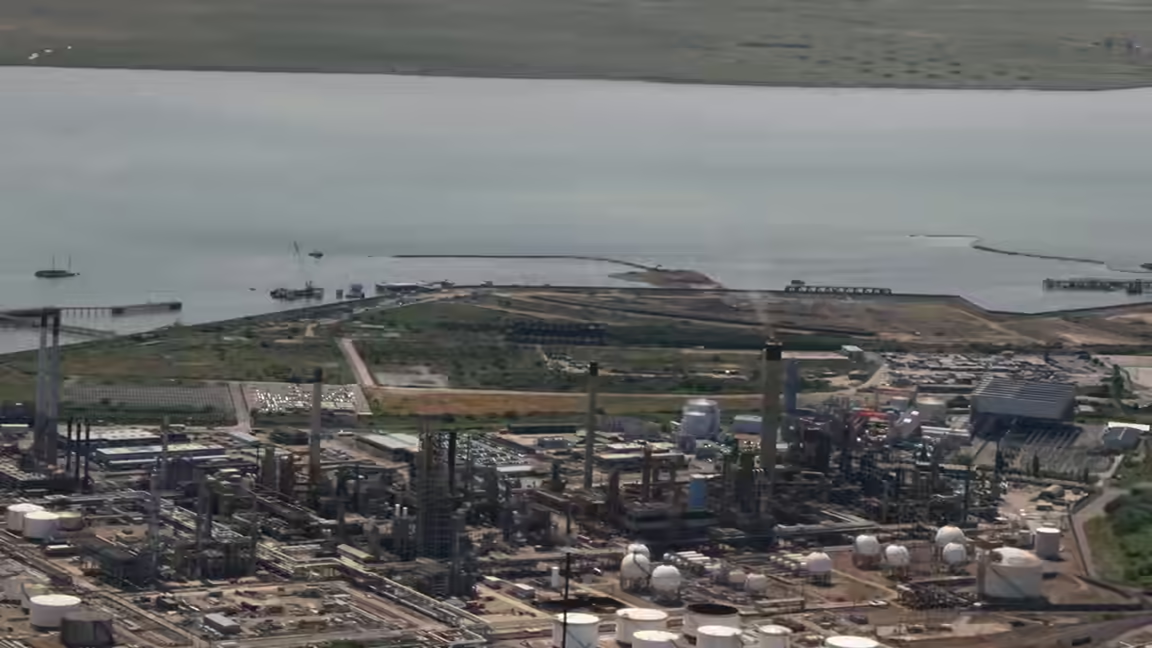
A major Russian oil refinery in Tuapse on the Black Sea has been hit for the third time this month by Ukrainian drones, prompting a large fire, nearby evacuations and another exchange of blame between Moscow and Kyiv.
The BBC said local officials described a “massive fire” at the refinery and ordered people living nearby to leave the area. More than 160 firefighters were deployed to deal with the blaze, and a temporary evacuation centre was set up in a school.
The latest strike adds to a damaging pattern. Earlier attacks on the same facility caused a large oil spill in the sea and left residents reporting black rain and oily residue across the town. That kind of environmental fallout is one reason the refinery has become such a prominent target in the campaign.
Ukraine’s military confirmed the strike, saying the refinery helps fund Russia’s full-scale invasion of Ukraine. That is the core logic behind Kyiv’s attacks on energy infrastructure: if Russia relies on oil revenue and refining capacity to sustain the war, then those facilities become military targets from the Ukrainian perspective.
Russia’s response was predictable but broad. The Kremlin accused Ukraine of destabilising global energy markets and said the attack worsened an already strained supply picture. President Vladimir Putin ordered the emergencies minister to Tuapse to supervise firefighting and cleanup.
The BBC also reported that residents were told to keep windows shut, wear masks and limit time outdoors because of combustion products in the air. That warning suggests the consequences were not just industrial but also public-health related.
The refinery’s repeated targeting is important because it shows how Ukraine’s long-range strike campaign is evolving. This is not a single symbolic hit. It is sustained pressure on a piece of infrastructure that Russia uses both for domestic supply and exports.
Moscow has tried to frame the attacks as reckless and globally disruptive. Kyiv has tried to frame them as lawful wartime pressure against an economy supporting invasion. The truth for nearby residents is less ideological: every new strike raises the risk of fire, pollution and temporary displacement.
The BBC report also mentioned a separate Russian drone attack on Kyiv that injured one person, a reminder that the war continues to move in both directions. But the Tuapse strike stands out because of its repetition and scale. When the same facility burns three times in two weeks, it becomes a pattern rather than an isolated incident.


