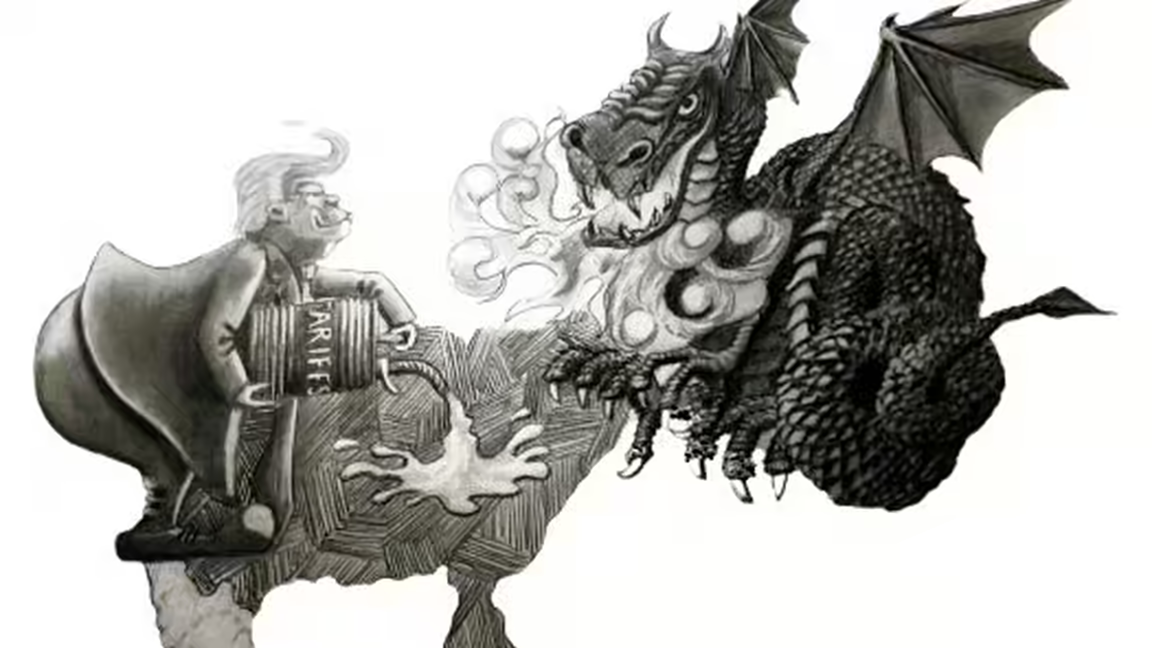
President Donald Trump said the month-old ceasefire between the United States and Iran remained in force despite an exchange of fire involving three American guided-missile destroyers in the Strait of Hormuz. He described the US response as limited but warned that future attacks could be substantially heavier if Tehran failed to conclude a peace agreement quickly.
US Central Command characterized its operation as self-defence. According to CENTCOM, the USS Truxtun, USS Rafael Peralta and USS Mason were travelling through the strait toward the Gulf of Oman when Iranian forces used several types of weapons against them, including missiles, unmanned aircraft and small vessels. The command said American forces intercepted the incoming attacks.
The US response struck facilities that CENTCOM linked to the operation against its ships. Its target list included launch positions for missiles and drones, command sites, and intelligence, surveillance and reconnaissance infrastructure. The military statement did not provide casualty figures or a public assessment of damage from the strikes.
Iran's Islamic Revolutionary Guard Corps offered a conflicting account. It said its action against the US vessels was retaliation for American attacks on an Iranian oil tanker moving toward the strait and on civilian locations along Iran's coast. The IRGC also claimed that the destroyers sustained significant damage. CENTCOM disputed that assertion, and the supplied evidence contained no independent evaluation that resolved the competing claims.
Asked whether the fighting had ended the ceasefire, Trump rejected that interpretation. His position treated the naval episode and the American retaliation as contained incidents rather than a formal return to sustained war. At the same time, his language left the truce under pressure: he said the United States would strike again with greater force unless Iran signed a deal.
The confrontation highlighted the fragility of an arrangement that had paused wider hostilities without eliminating military contact around a strategically important shipping route. The Strait of Hormuz connects the Gulf with the Gulf of Oman and was the setting for both sides' accounts, but their narratives differed on who initiated the sequence and why.
As of the event date, Washington's official position was that the ceasefire continued. That declaration did not settle questions about the tanker, alleged coastal attacks, damage to US ships or the potential terms of a broader accord. The immediate outcome was therefore an uneasy combination: direct combat had occurred, yet the US president stopped short of declaring the truce over.
The continued presence of armed units from both countries around the passage meant another encounter could rapidly challenge that interpretation. Neither military statement described a mechanism for investigating incidents or preventing renewed contact.


