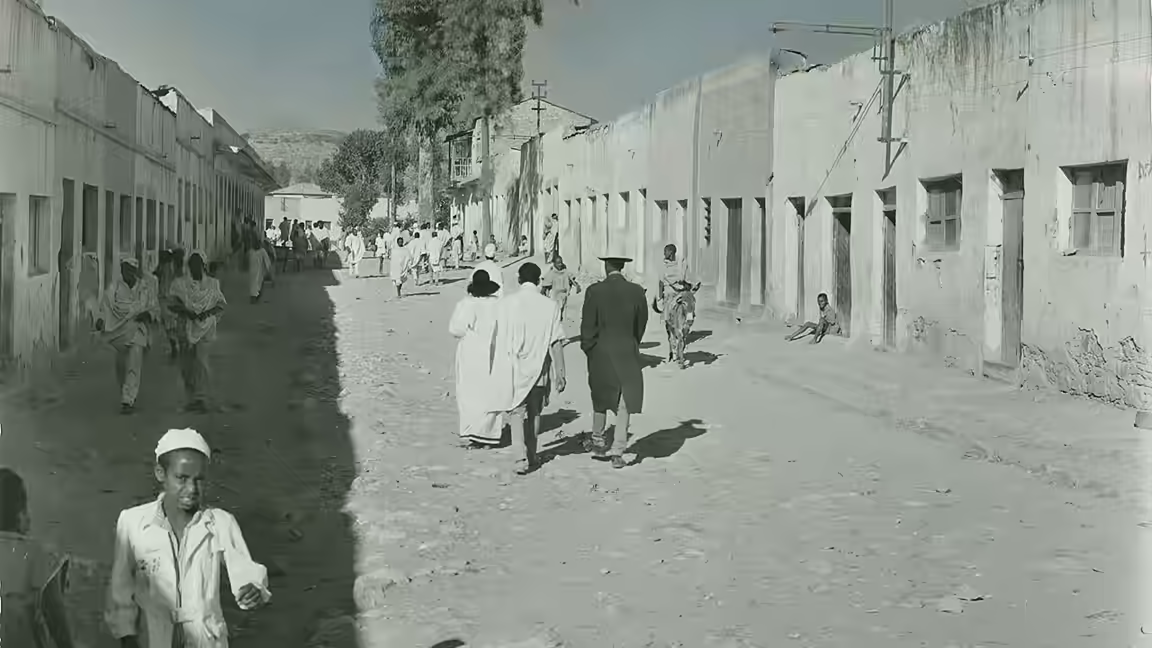
Sudan’s army says it has recaptured Khor Hassan, a town in southeastern Blue Nile state near the Ethiopian border, from the Rapid Support Forces.
According to the supplied Al Jazeera report, the army announced on 2026-05-15 that it had seized the town from the RSF and inflicted heavy losses on the paramilitary group. The claim is significant because Blue Nile state has become one of the war’s key flashpoints, serving both as a gateway into central Sudan and as a border zone with major strategic value.
Control of that area matters far beyond the town itself. The report says Blue Nile’s geography makes it an important corridor for movement into central Sudan, which means shifts on the ground there can affect the wider balance of the war. It also borders Ethiopia, an added layer of regional sensitivity in a conflict already shaped by accusations of outside support.
Sudan’s government accuses Ethiopia and the United Arab Emirates of backing the RSF, while both countries deny the allegations. The report also notes that the RSF had been holding Khor Hassan with support from the Sudan People’s Liberation Movement-North, another reminder that the conflict in Blue Nile is entwined with local armed alliances as well as the main war between Sudan’s rival military leaders.
The army said the capture was part of a broader strategy to retake Kurmuk, another town near the border that serves as a vital corridor for cross-border trade and access to infrastructure including the Al-Roseires Dam. That suggests the Khor Hassan battle is not isolated but part of a larger push to restore military and logistical control in the southeast.
The report also says the RSF seized Khor Hassan in March, making the latest announcement a reversal of a relatively recent loss. In a war that has shifted front lines repeatedly, such gains can be temporary, but they still matter because they shape supply lines, morale and local population displacement.
The wider conflict began in April 2023 after a power struggle between Abdel Fattah al-Burhan, who heads the national army, and Mohamed Hamdan Dagalo, or Hemedti, who commands the RSF. The report says more than 150,000 people have been killed and more than 12 million displaced since then, a reminder that even a single town’s change of control sits inside one of the world’s worst humanitarian crises.
The source does not provide independent verification from the battlefield, nor does it give RSF comment on the claim. But it is clear that the army is presenting the recapture as both a tactical and symbolic success in a state whose location gives it outsized importance.
If the army can hold Khor Hassan, it strengthens its position in the southeast and helps set up further pressure on Kurmuk. If it cannot, the area may again change hands. For now, the verified fact is simply that Sudan’s army says it has retaken the town and that the fight for Blue Nile state remains central to the war’s next phase.


