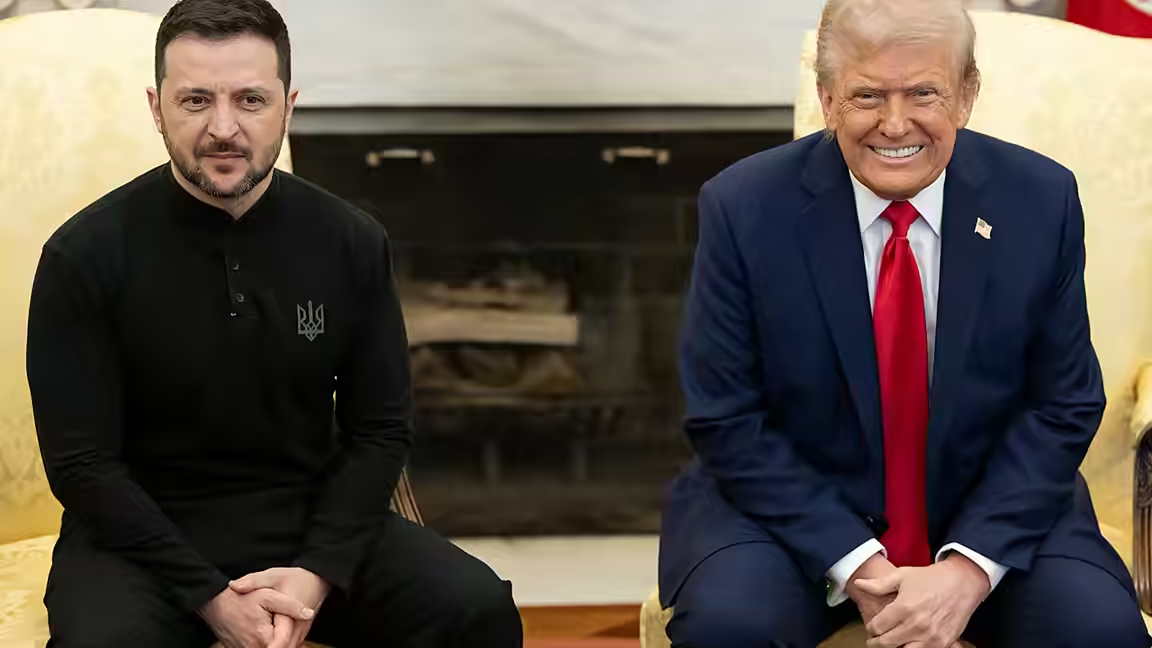
Scores of drones struck Moscow overnight, hitting the Russian capital's oil refinery for the second time this week and prompting Ukraine's president to sharpen his rhetoric. Volodymyr Zelenskyy said Russia should understand that if Ukraine burns, Moscow will burn too, a warning that reflects how the war is increasingly reaching into the Russian heartland. The attack on the refinery and the president's comments together turned another night of drone warfare into a broader political message.
Zelenskyy also said Ukraine did not want the war and never had wanted it, then called on Europe and the United States to increase pressure on Russia. His message was aimed at sanctions as much as missiles: he said Russian defence and energy sectors, along with the wider economy, should face more pressure until Vladimir Putin is forced toward an end to the war. The central point was that escalation alone is not enough unless it changes Moscow's calculation.
The timing mattered because Zelenskyy was speaking from the European Council meeting in Brussels, where leaders were discussing support for Ukraine and the next steps in its path toward EU membership. European Council president António Costa called the week historic, and European Commission president Ursula von der Leyen said Ukraine deserved the momentum because it had pushed through reforms. Their language suggested that political backing from Europe remains strong even as the battlefield changes.
The summit also showed how the conflict is shaping European security thinking. Lithuanian president Gitanas Nausėda said there was growing evidence that the war was moving closer to the Russian population, which he called a potential gamechanger. He argued that Russia still was not showing a willingness to enter serious ceasefire talks, and said the EU still has more instruments it can use to push Moscow toward negotiations. That underscores the view in several capitals that more pressure, not less, is needed.
At the same time, the war is testing transatlantic unity. US defence secretary Pete Hegseth used the same news cycle to criticise NATO and call some allies free riders, while also saying a review of US posture in Europe was under way. That backdrop matters because Ukraine is trying to keep European and American support aligned while Russia adapts its own tactics. The drone strike on Moscow was therefore not just a military event but a reminder that the conflict is being fought in parallel on the battlefield and in alliance politics.
The capital strike and Zelenskyy's response together show a war entering a new phase of proximity. What once seemed remote for ordinary Russians is now landing near the Kremlin and its fuel infrastructure. For Ukraine, the message is that the cost of the invasion can be pushed back toward the place that launched it. For Europe, the message is that the war is still deepening, even while diplomats continue to speak in the language of negotiations.


