# Lebanese sea turtle conservationist Mona Khalil dies after strike on home
On the June 19, 2026 event date, supporters and environmental advocates mourned a grassroots figure who spent decades protecting nesting beaches in south Lebanon.
Event date: June 19, 2026
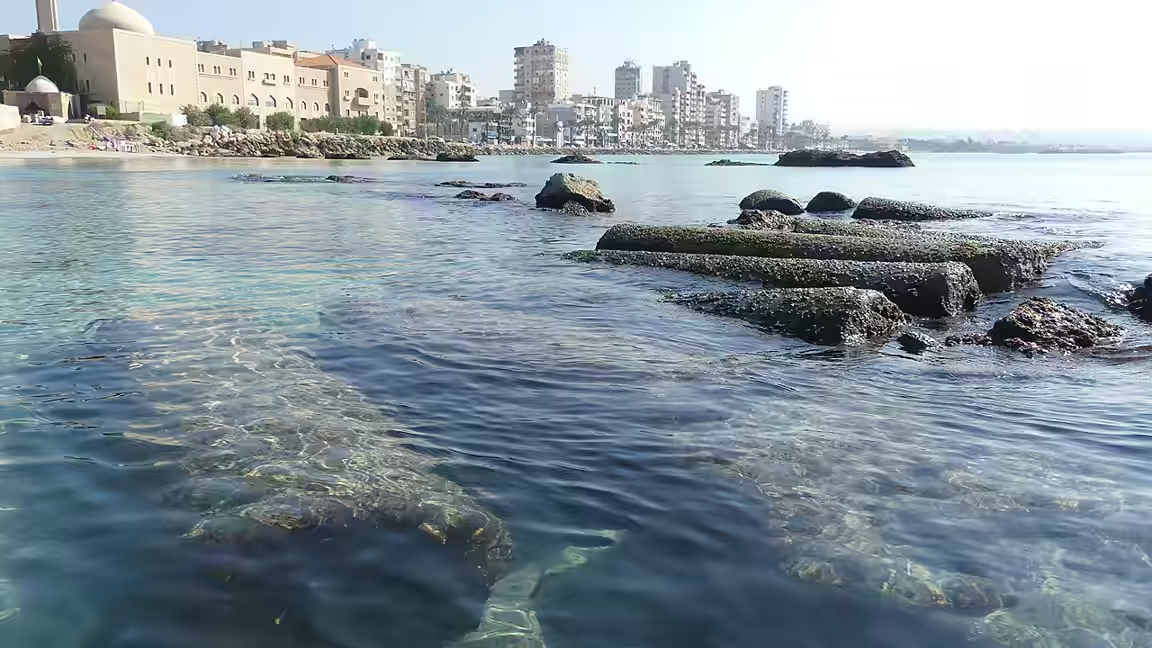
Lebanese environmental activist Mona Khalil, known for years of work protecting endangered sea turtles on the country’s southern coast, died after suffering wounds in an Israeli strike on her home near Mansouri beach, according to The New Arab.
The report said Khalil had been injured earlier in the month when an air strike hit her home, the Orange House, on the beach near Tyre. She later died on a Friday after spending days in hospital receiving treatment for severe injuries. Her death prompted tributes from environmentalists, journalists, activists and residents who described her as one of the country’s most influential grassroots conservation figures.
Khalil’s public legacy, as presented in the evidence packet, was built over more than a quarter century of local environmental work. The New Arab said she dedicated her life to protecting loggerhead and green sea turtles that nest along Lebanon’s southern coastline. The article traced that mission to 1999, when a nighttime encounter with a turtle laying eggs on Mansouri beach became, in the words of those paying tribute, a turning point that shaped the rest of her life.
In 2000, Khalil and her partner Habiba Fayyad established the Orange House. The report described it as an early eco-tourism and environmental project that evolved far beyond a guesthouse. It became a wildlife sanctuary, a place for environmental education and research, and a gathering point for volunteers, campaigners and visitors. Through that work, Khalil helped turn Mansouri beach into one of the eastern Mediterranean’s most important nesting grounds for endangered sea turtles.
The New Arab also portrayed Khalil as someone who kept working through repeated shocks that might have driven others away. It said she continued documenting marine life, protecting nesting sites and campaigning against environmental destruction despite years of war, political instability and economic crisis in Lebanon. Her relatives and supporters emphasized that she had refused to leave the Orange House even amid danger.
The strongest evidence in the packet about her influence comes from the breadth and consistency of the tributes quoted by the source. Her cousin, journalist Ramsay Short, remembered her as a person who opened her home widely while defending the beach and its wildlife. Environmental activist Maya Chams Ibrahimchah described Khalil’s life’s work as a lasting monument that would endure through the turtles returning to Lebanon’s shores. Those tributes do not just mark grief. They also show how closely Khalil’s identity had become tied to one specific coastline and the living system she worked to preserve.
That makes the circumstances of her death especially stark. The article said Israel’s war on Lebanon had caused thousands of deaths and injuries since March 2, while Khalil’s own death symbolized another kind of loss inside the broader conflict: damage to people and places that preserve ecological memory and local stewardship rather than military value.
The evidence available does not provide a wider institutional assessment of her projects or a formal accounting of the long-term impact of her conservation work. But it does support a clear conclusion about her role in south Lebanon. Khalil was not presented as a distant campaign figure or a symbolic patron. She was shown as a hands-on protector of a threatened coastline whose work joined hospitality, activism, environmental education and species protection in one place.
Her death therefore resonated beyond personal mourning. In the account supplied here, it represented the loss of a custodian of one of Lebanon’s most important turtle habitats, and of a community figure whose environmental work outlasted repeated national crises until it was interrupted by war.


