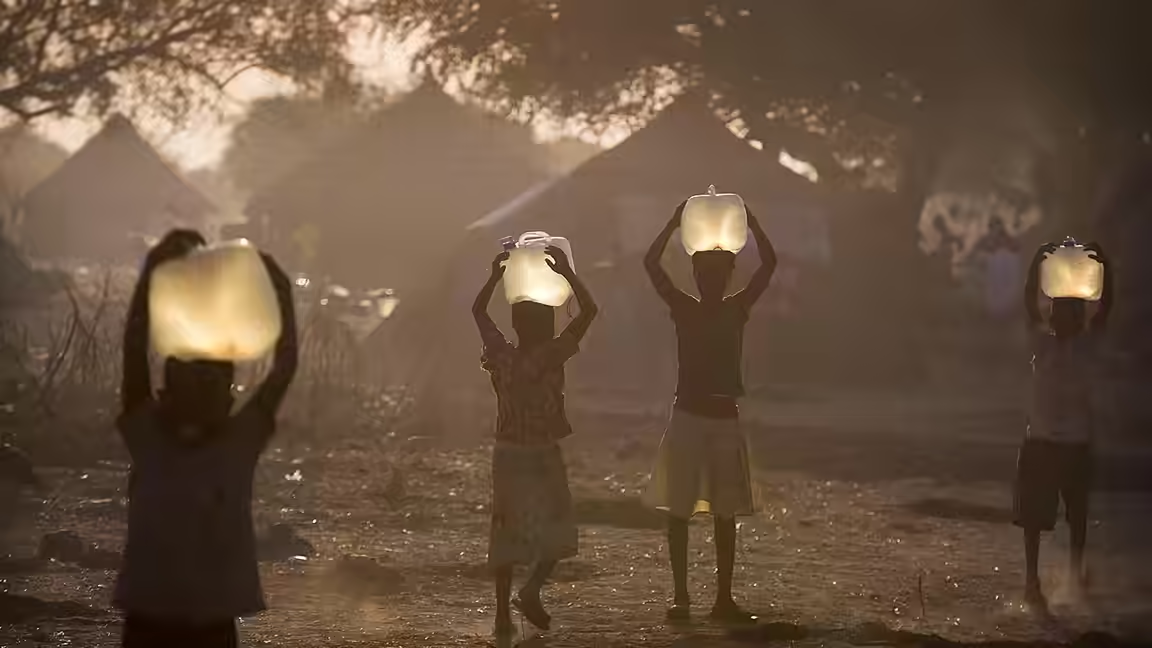
Intensified fighting around El-Obeid in Sudan's North Kordofan state is forcing children and families to flee and seek shelter, according to UNICEF, which warned that roughly half a million civilians are at risk as the violence deepens.
The warning adds another layer of pressure to a war that has already displaced millions across Sudan and left health, shelter and food systems under severe strain. El-Obeid sits at a strategic junction in central Sudan and has repeatedly been caught in the contest between rival armed forces, making the city and its surrounding areas a flashpoint for population movement.
UNICEF's concern is focused on the immediate effects on civilians. The agency said the fighting is not only uprooting families but also exposing children to the loss of safety, school access and reliable care. Even when people remain close to home, the threat of shelling, road closures and shortages can turn ordinary movement into a risk, especially for children and caregivers who are trying to reach safer ground.
The single source available for this item frames the situation as one of urgent humanitarian danger rather than a battlefield update. That matters because the impact described is broader than the moment of fighting itself. When civilians begin to move in large numbers, the pressure shifts quickly to nearby towns, shelters, clinics and aid services that may already be stretched.
The warning also underscores how localized clashes in Sudan can produce wider displacement patterns. A city such as El-Obeid is not only a military objective; it is also a commercial and transport hub for surrounding communities. Once violence intensifies, families may be forced to decide between remaining in place under fire or abandoning homes, livelihoods and possessions with little notice.
UNICEF's statement, as reported by Anadolu, does not provide a full battlefield accounting. It does, however, make clear that the human cost is immediate and ongoing. The agency's emphasis on children and displaced families suggests the episode should be understood as part of Sudan's wider civilian protection crisis, where the main damage is often measured in lost access to safety rather than in territorial shifts.
For aid groups, the key question is whether people can still move away from danger and whether assistance can follow them. For families in and around El-Obeid, the more pressing reality is that each fresh round of fighting can turn a temporary refuge into another stop in a chain of displacement.
As the conflict continues, the warning from UNICEF points to a familiar pattern in Sudan: violence in one city quickly becomes a crisis for the surrounding population, and the burden falls first on children, parents and the local institutions trying to keep them safe.


