# US strikes damage 116 radio towers in Iran’s Hormozgan province, disrupting communications
*By IO Digest Desk*
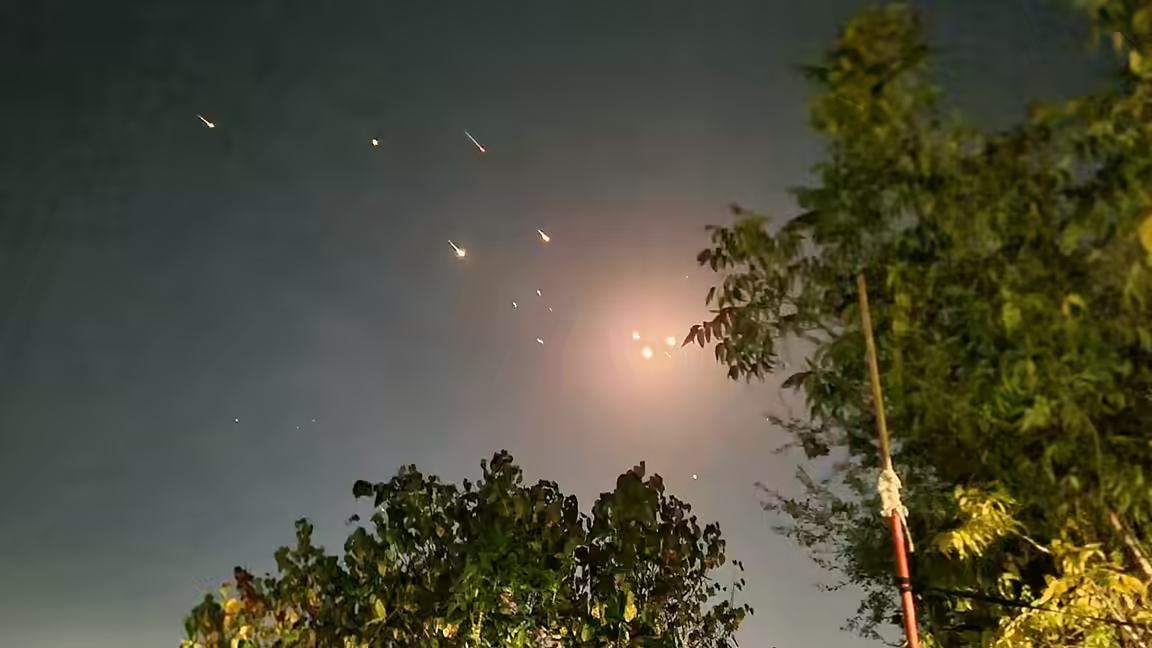
Communications services in Iran’s Hormozgan province were disrupted on event date 2026-07-18 after U.S. strikes damaged 116 radio towers, according to reporting supplied in this shard. The disruption came as the United States carried out a seventh consecutive night of strikes on Iran, signalling that the mid-June ceasefire framework between Washington and Tehran had broken down decisively [Sources 14711, 14712].
The English-language BBC extract says U.S. Central Command reported attacks on surveillance sites, military logistics infrastructure, underground weapons storage and maritime capabilities. Iran responded by targeting U.S. allies in the region, with Kuwait saying a power plant, a water distillation plant and an oil facility had been hit. Centcom also said two U.S. service members had been killed and one was missing after Iranian attacks in Jordan the previous day [Source 14711].
The reported tower damage matters because communications networks sit in the grey zone between civilian necessity and wartime utility. Knocking out 116 radio towers in one province would not simply degrade command-and-control possibilities. It would also affect ordinary connectivity, access to information and emergency coordination for civilians living in the area. In a conflict already marked by maritime pressure and regional retaliation, that expands the effect of the strikes beyond immediate military sites [Sources 14711, 14712].
The supplied BBC Persian extract reinforces the same broader sequence of events, describing the deaths of the U.S. personnel in Jordan, the hardening rhetoric from U.S. Defence Secretary Pete Hegseth, and Iranian messaging that the confrontation would bring unforgettable consequences for Washington. Even without relying on quoted Persian-language wording, the extract supports the conclusion that the latest night of strikes was part of escalating reciprocal action, not a single isolated raid [Source 14712].
The background in the English report is equally important. The two sides had agreed in mid-June to stop fighting to enable negotiations toward a permanent peace, but talks made little progress and President Donald Trump declared the deal over on 8 July. The U.S. then reimposed a blockade of Iranian ports while Tehran declared the Strait of Hormuz shut. Within that context, attacks on communications infrastructure in Hormozgan, the province overlooking the strait, take on added operational significance [Source 14711].
What the supplied evidence supports is specific even if broader battlefield details remain fluid: the U.S. struck Iran for a seventh straight night, communications in Hormozgan were disrupted after 116 radio towers were damaged, and the escalation unfolded alongside Iranian retaliation against regional U.S. partners. Those facts show a conflict moving deeper into infrastructure warfare. On the evidence available here, the immediate impact was not confined to military compounds; it also reached the information systems that connect one of Iran’s most strategically important coastal provinces [Sources 14711, 14712].


