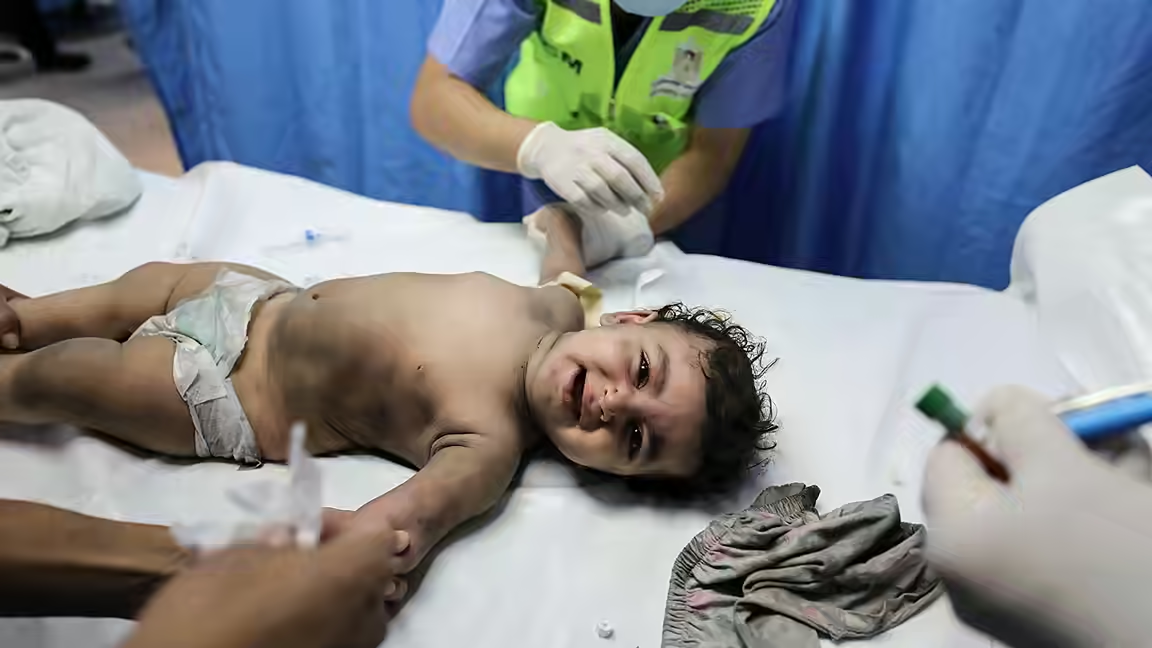
Israeli security forces withdrew overnight Friday from the Qalandiyah refugee camp and the neighboring Kafr Aqab area north of Jerusalem, ending a two-day military operation that Palestinian officials said left 51 people treated for injuries, more than 60 people arrested or detained, and extensive damage to private and public property. The Palestinian Authority accused Israel of trying to establish military control in the area, while Israel said the raid targeted terrorist elements and weapons trafficking.
The withdrawal closed out a raid that was described in sharply different terms by the two sides. Palestinian officials framed the damage and detentions as proof that the operation was aimed at tightening military control. Israel, by contrast, presented the same action as a security move focused on weapons trafficking and armed groups. The supplied evidence does not provide an independent casualty audit, but it does show that the Palestinian Authority had already begun treating injuries and property damage as a major part of its account.
Qalandiyah and Kafr Aqab sit in an area that is already politically charged because of their location north of Jerusalem in the occupied West Bank. In that setting, even a short operation quickly becomes part of a larger argument over control, movement and enforcement. The fact that the raid lasted two days before Israeli forces pulled back suggests a deliberate sweep rather than a brief checkpoint action, but the evidence stops there and does not add detail about the tactics used on the ground.
The most verifiable takeaway is that the same event produced two incompatible narratives. Palestinian officials said residents were injured, detained and left with damaged property. Israeli officials said the objective was to hit terrorist elements and weapons trafficking. The dispute over purpose matters because it shapes how each side presents the raid to its own audience and to the wider international press.
It also matters because the Palestinian Authority's figure of 51 people treated for injuries is the only numeric casualty toll in the supplied source, while the Israeli side gives no comparable number. That leaves the report anchored to a narrow but solid set of facts: an overnight withdrawal, a two-day operation, more than 60 people detained or arrested, damage to property and competing official explanations. Anything beyond that would go past the evidence supplied for this row.
What remains unresolved is the practical impact on the camp and the neighboring neighborhood after the troops left. The supplied evidence does not say whether arrests led to formal charges, how many of the detained people were ultimately released or what repairs, if any, were needed after the reported damage. That silence is part of the story too, because it leaves the reader with a clear record of the operation but not a clean resolution. It also leaves open how residents will experience the aftermath once the immediate military presence fades. The best-supported conclusion is that the raid ended, but the argument over its purpose and effect did not. Until more reporting appears, the aftermath remains mostly a matter of competing claims and unanswered questions.


