At least seven people were killed in Russia during what officials described as Ukraine’s largest drone attack of 2026. Russian authorities said 822 aircraft were launched, more than 600 of them toward Moscow, as both countries exchanged extensive overnight strikes far from the ground front.
Five deaths occurred in the southwestern Rostov region. A woman died when a civilian bus was hit in Belgorod, and Moscow regional governor Andrey Vorobyov said an 83-year-old man was killed by a drone. The casualty reports came from Russian officials and were not independently verified in the supplied coverage.
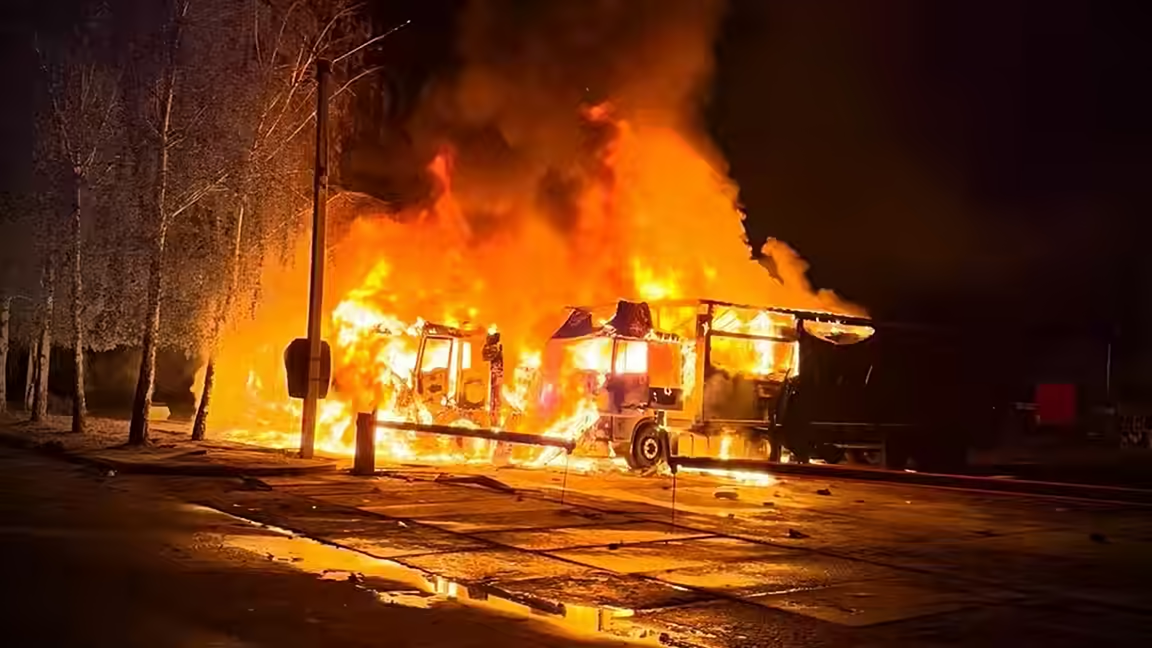
A Wildberries distribution centre at Koledino, about 25 kilometres from central Moscow, burned after a strike, injuring three people. Ukraine said the operation disabled the seventh of Russia’s ten largest Wildberries logistics hubs and accused the retailer’s network of supporting military procurement. The company has faced repeated attacks since July.
Russia carried out its own deadly assault on Ukraine the same night. A guided bomb hit a private home in Zaporizhzhia, killing a 66-year-old man and a 64-year-old woman. Two people died in Kryvyi Rih, while authorities reported one death in each of Sumy, Donetsk and Kherson. At least 39 people were injured nationally.
Kyiv sounded air-raid warnings four times. Mayor Vitali Klitschko said at least six people, including a child, were injured. Strikes damaged a book market in the Pochayna district, where vendors described losing irreplaceable stock. Russia said it targeted a missile-parts site and a drone-components factory.
Ukrainian President Volodymyr Zelensky said Russia had attacked 13 regions during the week with more than 1,550 drones, nearly 1,560 guided bombs and 62 missiles. Those figures were a Ukrainian government account. Russia and Ukraine each accused the other of attacking civilians while describing their own targets as connected to military capacity.
The exchange illustrated the war’s increasing reliance on long-range systems. With ground forces making limited gains, Ukraine used domestically produced drones to reach deep into Russia, while Moscow intensified missiles, drones and guided bombs against Ukrainian cities and infrastructure.
The August 16 toll covered separate attacks in both countries and should not be combined into a claim about one strike. Seven deaths were reported on each side, with different authorities documenting locations and damage. The scale around Moscow showed Ukraine’s expanding reach, while the simultaneous Russian barrage demonstrated the continuing cost imposed on Ukrainian civilians.
Ukraine has depended on Western Patriot interceptors against ballistic missiles, but US stockpiles were constrained by the Iran war. That shortage encouraged Kyiv to develop domestic weapons while leaving air-defence capacity a continuing concern during large Russian salvos.


