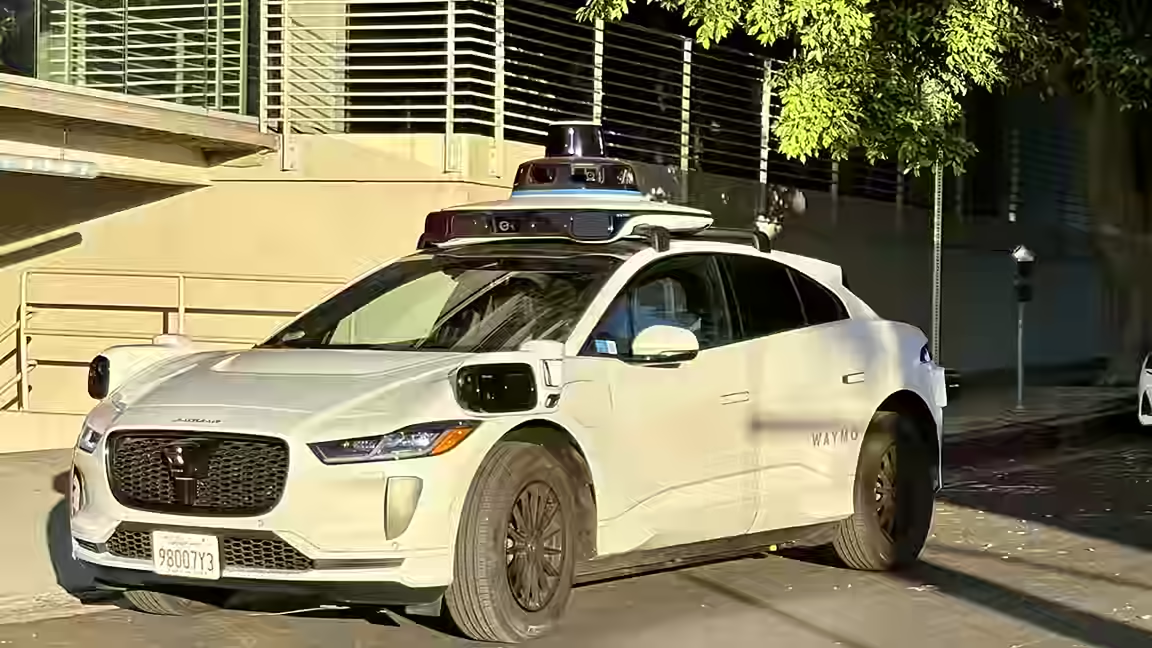
Waymo is preparing to launch a fully autonomous ride-hailing service in Toronto in 2028, marking the company's planned entry into Canada. The company said residents will first see its vehicles operating manually as teams begin mapping streets and validating the technology against local driving conditions.
The opening phase will use trained autonomous-driving specialists behind the wheel. Waymo plans to build high-definition maps of Toronto's road network before moving through further testing stages. The company framed the sequence as a safety-led rollout rather than an immediate driverless service, with the first paying or public riders still two years away.
Toronto-based Element Fleet Management will provide end-to-end fleet services for the operation. Waymo said the partnership, together with other local suppliers, is expected to create hundreds of roles over time. The listed functions include fleet maintenance, validation driving, customer service and the operational work required to support a commercial autonomous fleet.
The project extends Waymo's existing links to Canada. The Canada Pension Plan Investment Board is a long-term investor in the company, while automotive supplier Magna International is a manufacturing partner. Element's role adds a Canadian fleet operator to the group that will support deployment and day-to-day service.
Waymo said its system is designed to operate in varied weather, an important requirement in Toronto. Initial testing will therefore focus not only on road geometry but also on how the Waymo Driver handles the city's specific traffic patterns and conditions. The company presents autonomous ride-hailing as an additional option alongside public transit, cycling infrastructure and conventional vehicles.
The company also cited its own safety analysis, saying data from more than 400 million fully autonomous kilometres showed substantially fewer serious-injury-or-worse crashes than human drivers in the cities where it already operates. That figure is a company claim tied to Waymo's existing markets and does not yet represent Toronto performance, since local autonomous validation is only beginning.
Accessibility groups including BALANCE for Blind Adults, CNIB, Community Living Toronto, Connected Canadians and Epilepsy Ontario are among the organizations Waymo says it is consulting. Early engagement could shape how vehicles, applications and customer support serve riders who face barriers using other transport options.
The Toronto announcement establishes a target and a local operating partnership, but significant work remains before a commercial launch. Mapping, supervised road testing and validation must precede driverless operations. By starting with manually driven vehicles, Waymo is beginning the data-gathering stage while giving city residents an early view of a service that is not expected to carry its first riders until 2028.