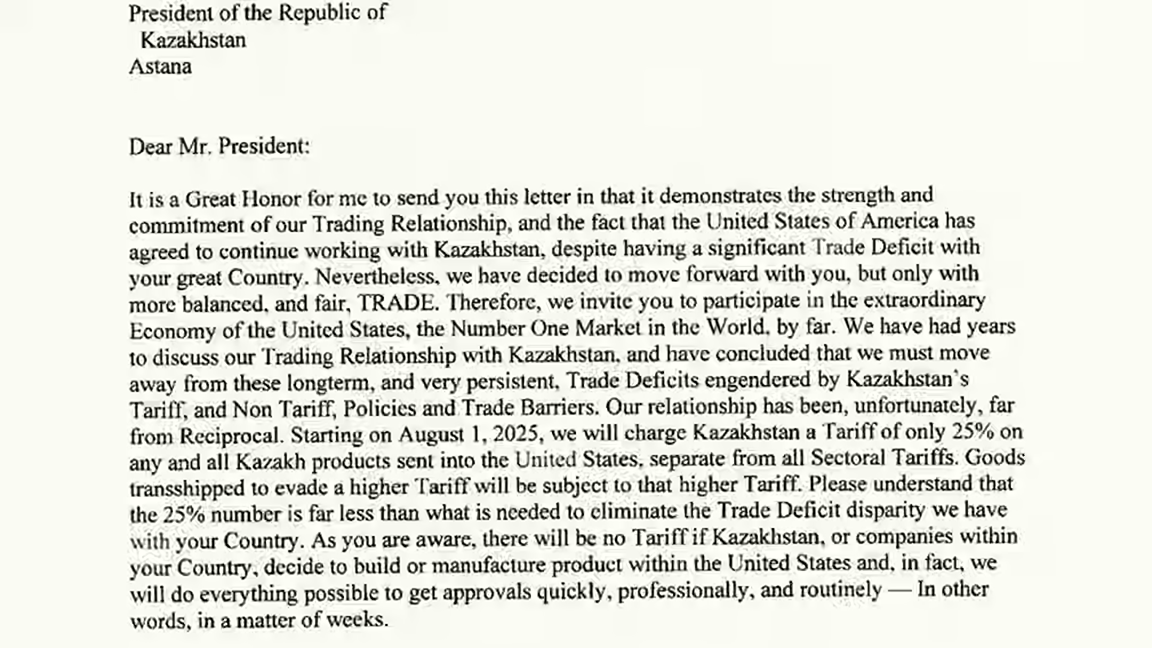
Trump orders 25% tariffs on steel and aluminum imports
President Donald Trump imposed 25% tariffs on all steel imports and raised aluminum tariffs to 25%, according to the supplied NBC News report. The move came on February 10, 2025, and immediately revived fears that the United States was heading back toward a broad trade fight with major suppliers.
NBC reported that the proclamations applied to steel imports from all countries and removed the earlier aluminum rate of 10%, leaving no exceptions or exemptions. Trump presented the move as a way to strengthen U.S. industry, promising to make America rich again and arguing that the tariffs would protect domestic jobs and reduce the trade deficit. His trade adviser, Peter Navarro, cast the policy as a shield for what he called the backbone of America’s economic security.
The tariff package also had a political rhythm to it. NBC’s account says it came only a week after Trump promised to suspend tariffs on Canada and Mexico, which suggests an administration willing to move quickly and then adjust on the fly. The report notes that the rationale this time was less about the national-security framing Trump used in his first term and more about jobs, trade balance and leverage over foreign partners.
Markets and manufacturers had reasons to worry. The article says most U.S. steel consumption is already met domestically, but aluminum import dependence is much higher. That matters because tariffs can hit sectors unevenly: some producers may welcome protection, while downstream users of steel and aluminum absorb higher costs. NBC said analysts viewed the action partly as a negotiating tool, which means the policy could be used not only for industrial protection but also for extracting concessions from other countries.
There is also a historical echo here. Trump imposed steel and aluminum tariffs during his first administration, again citing strategic and security grounds. This time, NBC says, the justification was more ambiguous. That shift is important because it makes the policy harder to place inside a single doctrine. It is at once industrial policy, campaign promise, bargaining chip and a signal that the White House is willing to use tariffs broadly.
The immediate effect is uncertainty. Companies that import metal, use it in manufacturing or rely on global supply chains have to decide whether to absorb the new costs or pass them on. Either choice can ripple outward. Consumers may see higher prices, suppliers may lose business and trading partners may answer with retaliation.
The move was not merely symbolic. By applying a universal rate to steel and a steep increase on aluminum, Trump reset the terms of trade in a way that will be felt from ports and mills to factories and construction sites.