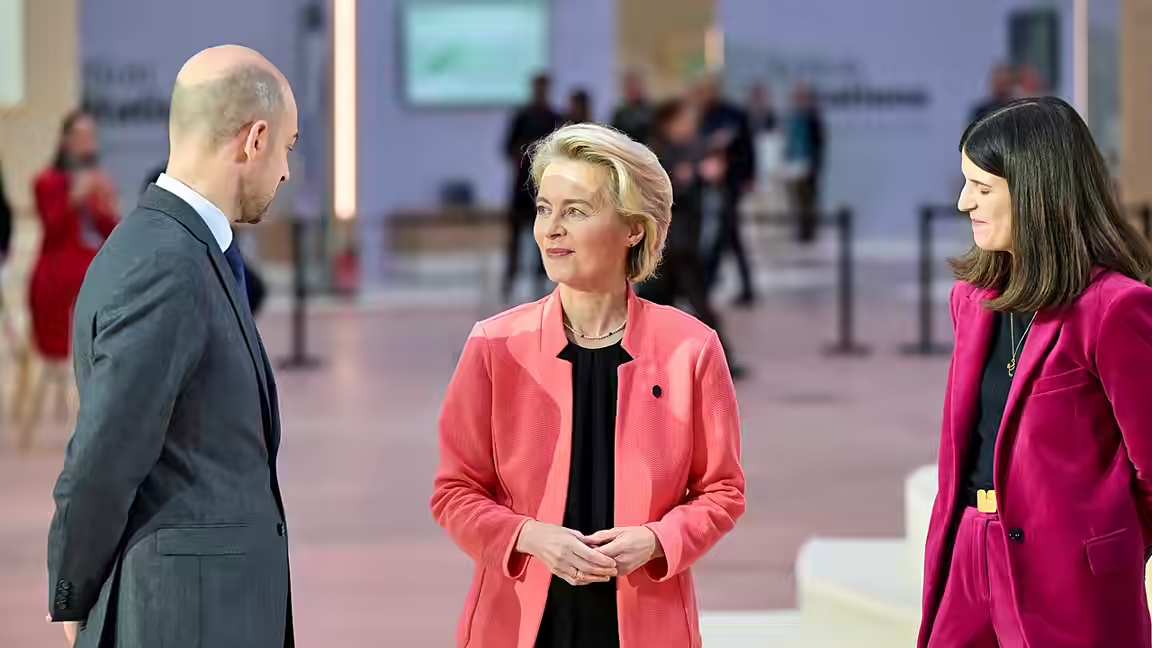
European Commission President Ursula von der Leyen publicly renewed an offer to remove tariffs on industrial goods traded between the European Union and the United States, seeking a negotiated route out of an escalating dispute with President Donald Trump's administration.
Von der Leyen said the Commission had proposed a “zero-for-zero” arrangement covering industrial products and remained ready for a deal. Euronews reported that the offer had been made before Trump's April 2 tariff announcement and had expanded from an earlier automotive proposal. Her April 7 remarks therefore kept an existing plan open rather than marking its first submission.
EU Trade Commissioner Maroš Šefčovič said the proposal could cover cars, chemicals, pharmaceuticals, rubber and plastic machinery. Politico reported that the EU's trade-weighted average tariff on US non-agricultural goods was 1.6%, although American cars faced a 10% duty. Earlier negotiations to remove industrial tariffs through the Transatlantic Trade and Investment Partnership had failed about a decade before.
Trump had announced a 20% tariff on EU imports scheduled to take effect on April 9. Steel, aluminium and cars were subject to separate 25% rates, while several categories including pharmaceuticals, semiconductors and energy were exempt. Euronews estimated that more than €380 billion in EU-made products would be affected.
Negotiation was not the Commission's only option. Von der Leyen said the EU would defend its interests with countermeasures if necessary, including potentially using an anti-coercion instrument created in 2023 but never activated. EU trade ministers met in Luxembourg as officials prepared a response to US steel and aluminium tariffs already in force.
The dispute was unsettling financial markets. Politico reported that European shares suffered their steepest one-day losses since the start of the Covid-19 pandemic. Von der Leyen warned that the US measures would impose costs on American businesses and consumers and damage the wider world economy.
Brussels also feared trade diversion if exporters facing even higher US tariffs redirected goods toward Europe. China was a particular concern because it already faced scrutiny over subsidised, lower-cost products. Von der Leyen announced an Import Surveillance Task Force to watch for sudden increases in particular products or sectors compared with historical trade patterns.
The proposal offered tariff removal across industry, not a blanket agreement covering agriculture, safety standards or every trade dispute. As of April 7 it remained an offer: talks could still produce a settlement, while the Commission prepared retaliatory tools in case they did not.