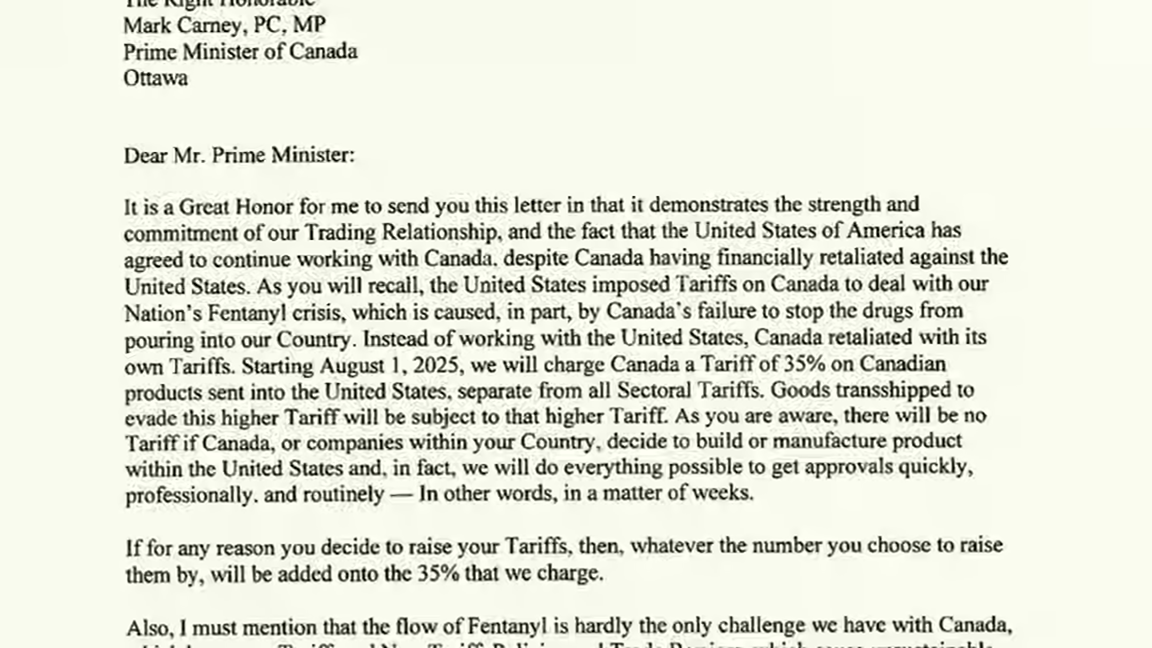
Donald Trump has said he will introduce a 100% tariff on films produced outside the United States, framing the move as a response to what he described as a threat to American industry and national security.
In a Truth Social post on May 4, Trump said the U.S. film business was in a "very fast death" because other countries were offering incentives to draw productions away from Hollywood. He said he had authorized the commerce department and the U.S. trade representative to begin work on the tariff immediately.
Commerce Secretary Howard Lutnick replied on X: "We're on it." But neither Lutnick nor Trump provided implementation details. It was not immediately clear whether the proposal would target studios, distributors or individual productions, or how films made by American companies overseas would be treated.
The announcement comes against a backdrop of long-running pressure on film production in California and wider competition from countries offering tax credits and rebates. The Guardian reported that film and television production in Los Angeles has fallen by nearly 40% over the last decade, while governments around the world have been trying to capture more of global screen spending.
The response was immediate in some of the countries that host major production work. Australia's home affairs minister, Tony Burke, said he had spoken with Screen Australia and that his government would stand up for the local screen industry. New Zealand Prime Minister Christopher Luxon said Wellington was waiting for more detail but would be an advocate for the sector.
The tariff threat also sits inside a wider trade campaign. Trump has already triggered a broader trade war, and the film industry has been exposed to the effects of those measures after China cut the quota of American films allowed into its market in April. China is the world's second-largest film market after the United States, making any new restrictions potentially significant for studio revenues.
Any actual tariff on films would raise difficult practical questions. Movies are distributed through digital and physical channels, financed across borders and often shot in multiple countries. The Guardian noted that no details had been offered on the mechanism, and that a former senior Commerce Department official said retaliation could be devastating for U.S. producers.
Trump cast the proposed policy as a way to bring production back to the U.S. But the evidence available on May 4 supports only the announcement itself, not any final rule, tariff schedule or legal basis. For now, the market signal is clear: the White House is signaling that entertainment is now part of the tariff fight, and allied governments are already preparing to respond.