India has approved tax cuts on hundreds of consumer goods, ranging from air conditioners to small cars, in an effort to boost domestic demand after the United States imposed steep new tariffs on Indian goods, according to the AP report. The move is meant to cushion the economy from a trade shock that could hit exports and slow growth if left unanswered.
Finance Minister Nirmala Sitharaman said the reduced goods and services tax rates had been approved by a powerful government panel and would take effect on Sept. 22, the first day of a major Hindu festival season ahead of Diwali. That timing is important. It gives households and retailers a clear date to plan around, while also connecting the measure to a period when consumer spending normally rises.
The reform simplifies India’s consumption tax structure from four tiers to two main rates: 5 percent and 18 percent. The previous system had rates of 5, 12, 18 and 28 percent. The government also proposed a special 40 percent rate on a handful of luxury and sin items such as high-end cars, tobacco and cigarettes, while life and health insurance would carry no tax at all.
Prime Minister Narendra Modi framed the move as part of a broader push to protect the economy and support small traders and businesses. The AP report says the U.S. tariffs are expected to affect an estimated 48.2 billion dollars worth of Indian exports. That gives the tax cuts a defensive purpose as much as a political one: New Delhi wants to offset external pressure by making the home market cheaper and more resilient.
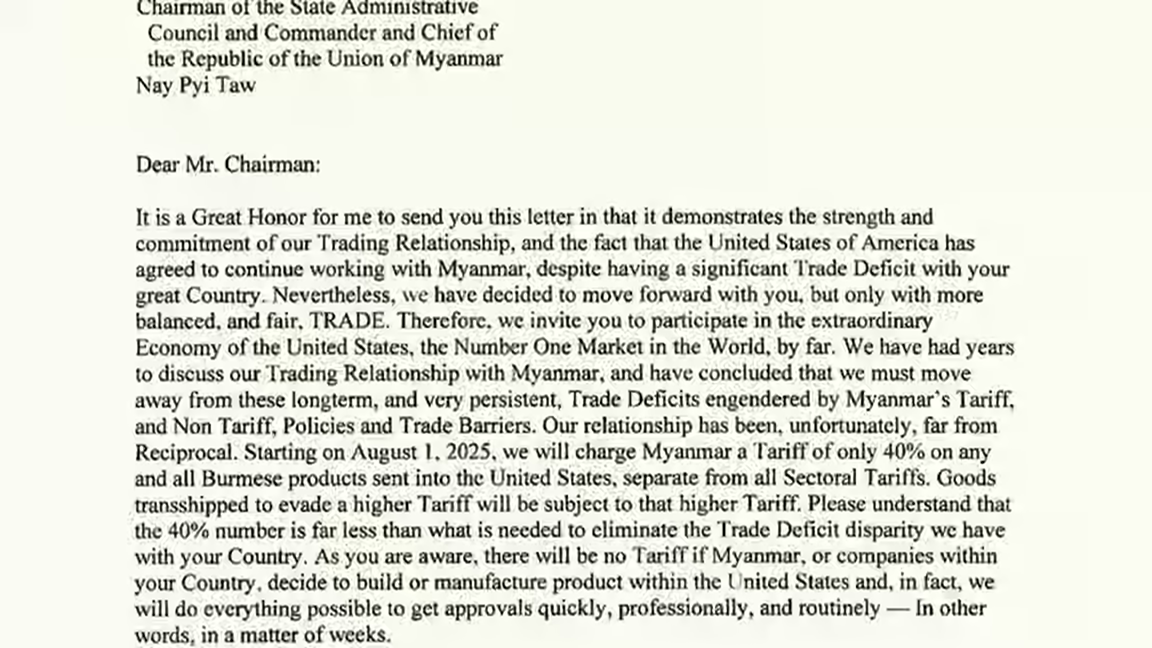
The tariff issue itself has sharpened quickly. President Donald Trump added another 25 percent tariff on Indian goods last month in response to India’s continued purchase of Russian oil, bringing the total duties to 50 percent. That is a serious escalation between two countries that have expanded trade in recent years but remain vulnerable to disputes over access and politics. The AP report says the relationship between the two biggest democracies has become strained by this move.
Officials are already looking beyond the U.S. market. The report says India is trying to expand exports to Europe, Latin America, Africa and Southeast Asia, and that talks with the European Union have taken on renewed urgency. That means the tax cut package is not being treated as a one-off consumer measure. It is part of a wider attempt to keep the economy moving even as one of its biggest export destinations becomes more difficult.
The plan also shows how quickly trade policy can reshape domestic tax policy. Instead of waiting for a tariff fight to play out abroad, India is using its own tax system to support demand at home. The result is a more consumer-friendly structure, but one driven in large part by external pressure from Washington.
The government is also betting that cheaper consumer goods will help keep domestic demand from softening while exporters search for new markets. That makes the tax changes both a household measure and a buffer against the possibility that tariff damage could be felt well beyond the export sector.