# Slovenia caps daily fuel purchases as cross-border demand strains supplies
Slovenia has become the first European Union member state to introduce fuel rationing as it tries to contain the effects of a sharp rise in fuel demand and supply disruption linked to the war involving Iran, according to the BBC.
Under the new rules, private motorists are limited to buying 50 litres of fuel per day. Businesses and farmers are allowed up to 200 litres. The measures are in force until further notice and are intended to stop fuel shortages from worsening as more drivers cross the border from neighbouring countries to buy cheaper, regulated fuel.
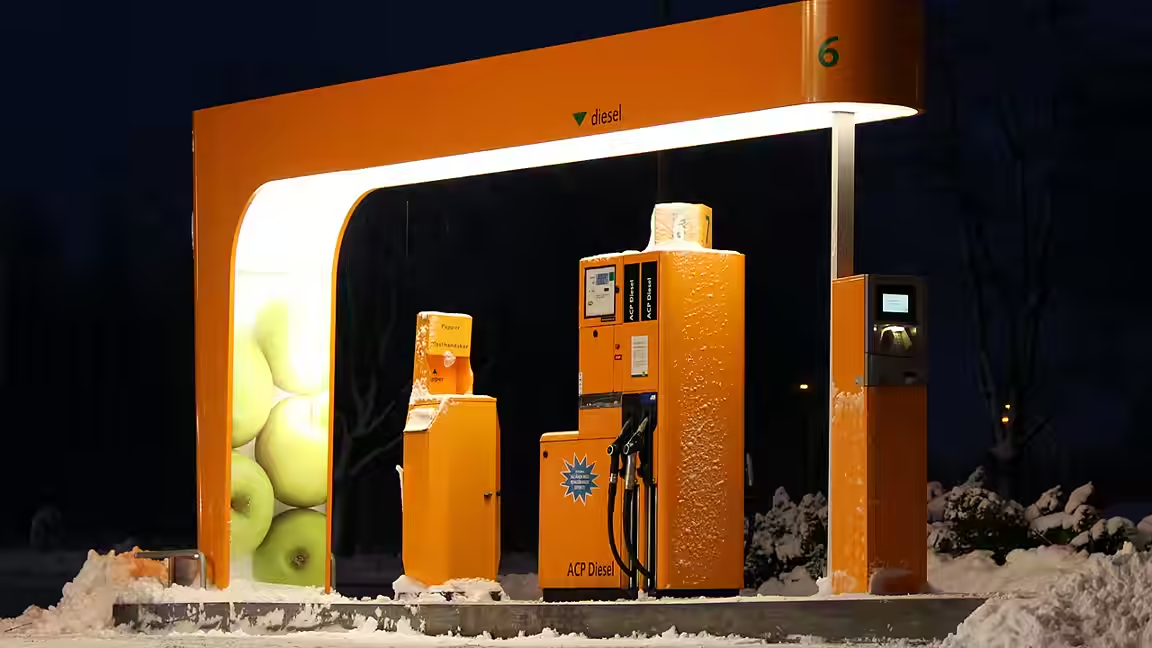
The BBC said the phenomenon has become known locally as fuel tourism. Lower prices in Slovenia have encouraged drivers from Austria and elsewhere to fill up there, adding pressure to fuel stations already dealing with volatile regional supply conditions. Some retailers had already acted before the government stepped in. Hungary’s MOL, which runs petrol stations across the region, had reportedly imposed its own 30-litre limit.
Prime Minister Robert Golob has sought to calm fears, saying there is enough fuel in the country and that warehouses are full. Even so, the government’s new policy places responsibility on petrol station staff to enforce the limit and stop customers from stockpiling more than the permitted amount. Officials are also encouraging fuel retailers to apply tighter limits for foreign drivers.
The pricing gap is a major driver of the pressure. The BBC reported that fuel in Austria is significantly more expensive, with Euro-super 95 approaching €1.80 a litre and diesel near €2.00. In Slovenia, prices were held lower, though set to rise the following Tuesday. That gap has made the country a destination for motorists looking to save money, even if it means queueing and potential shortages for local users.
The reaction on the ground has been mixed. The BBC quoted a lorry driver near the Austrian border who said he wondered whether his country was at war after arriving at a station that had run dry. Others in Slovenia see the influx of foreign drivers as a nuisance because it creates congestion and can leave less fuel for residents. Some local businesses, however, welcome the traffic because drivers often spend money in restaurants and shops while waiting or refuelling.
The wider significance of Slovenia’s move is that it shows how quickly a regional energy shock can turn into day-to-day consumer controls. Rather than direct shortages at the wholesale level, the government is trying to manage who can buy what, when and how much, in the hope of preventing panic buying and keeping the market functioning while prices remain under strain.