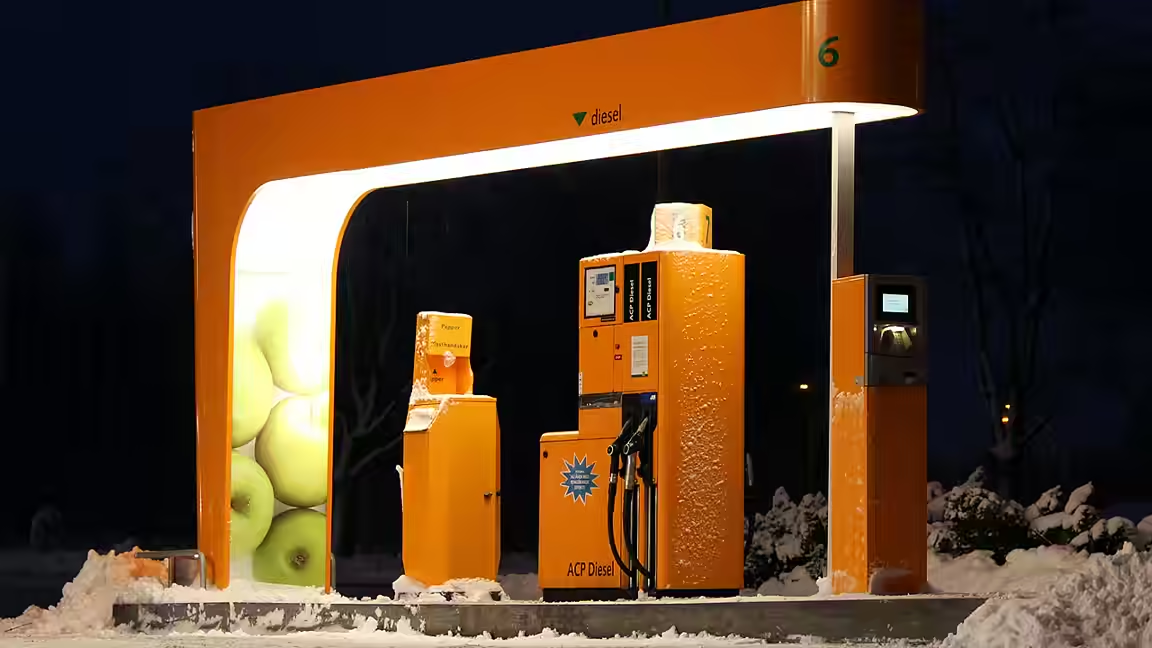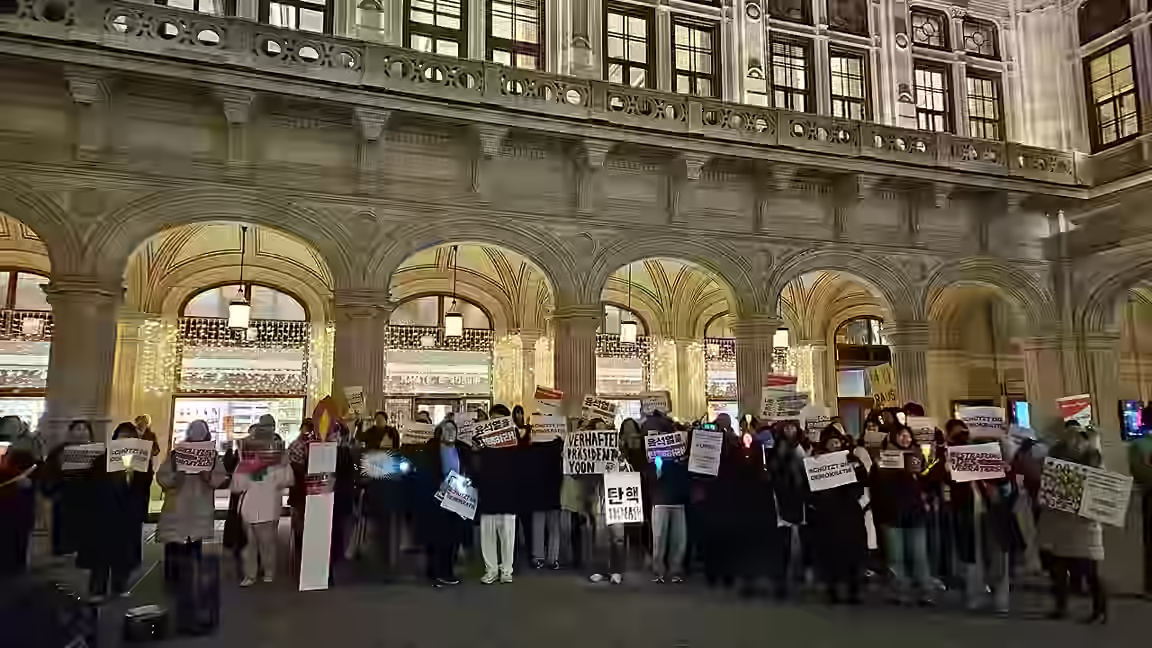
Protests over fuel prices have created disruption in Ireland and spread to Norway, with officials and demonstrators alike warning that the pressure on households and businesses could last if the underlying cost problem is not eased. The unrest sits inside a wider jump in energy prices that has hit countries dependent on imported fuel and gas.
In Ireland, the action reached a new scale on April 10, 2026, after four consecutive days of protests. Hauliers, farmers and other groups blocked motorways and brought parts of Dublin to a standstill. The Guardian reported that drivers were urged to buy only the fuel they needed because stations were running dry, and the National Emergency Coordination Group warned the number of empty forecourts could rise sharply.
The consequences were not limited to traffic. The blockade of ports and a refinery meant Ireland was close to turning away oil deliveries and risking broader supply disruption, according to taoiseach Micheál Martin. Police warned that the protests were endangering food, fuel, clean water and animal feed deliveries. An Garda Síochána said the action “is not tolerable and is against the law,” while the government put the army on standby to help remove blockades if needed.
Negotiations were under way, but not with the protesters themselves. Ministers met representative bodies from the haulage and farming sectors on Friday, and the talks ended without a resolution. The deputy premier, Simon Harris, said the government expected a “substantial and significant” package of support for key sectors and that further intensive engagement would continue. A protest spokesman, Christopher Duffy, said the action would continue until there was detail on a serious reduction in costs.
The fuel spike has also fed into everyday services. The Irish Medical Organisation warned that slower emergency response times and missed healthcare appointments would harm patients. The courier company DPD suspended deliveries. In total, the picture in Ireland was of a country trying to keep transport, health and supply chains functioning while demonstrators kept pressure on the government.
In Norway, meanwhile, lorry drivers took part in a “diesel roar” protest and drove a convoy to parliament in Oslo. The Guardian said roughly 70 to 80 trucks joined the demonstration, though only a handful were allowed into the capital itself. Norway cut fuel taxes on April 1, but hauliers said they still needed lower and more predictable prices. Statistics Norway reported that fuel and lubricants rose 17.9 percent from February to March, with diesel up 23.6 percent in that period.
The protests were driven by the wider shock to global oil markets after the war in the Middle East pushed up prices and restricted shipping through key routes. The immediate politics differed from country to country, but the common thread was the same: consumers and transport operators were confronting fuel prices that many said had become unsustainable.