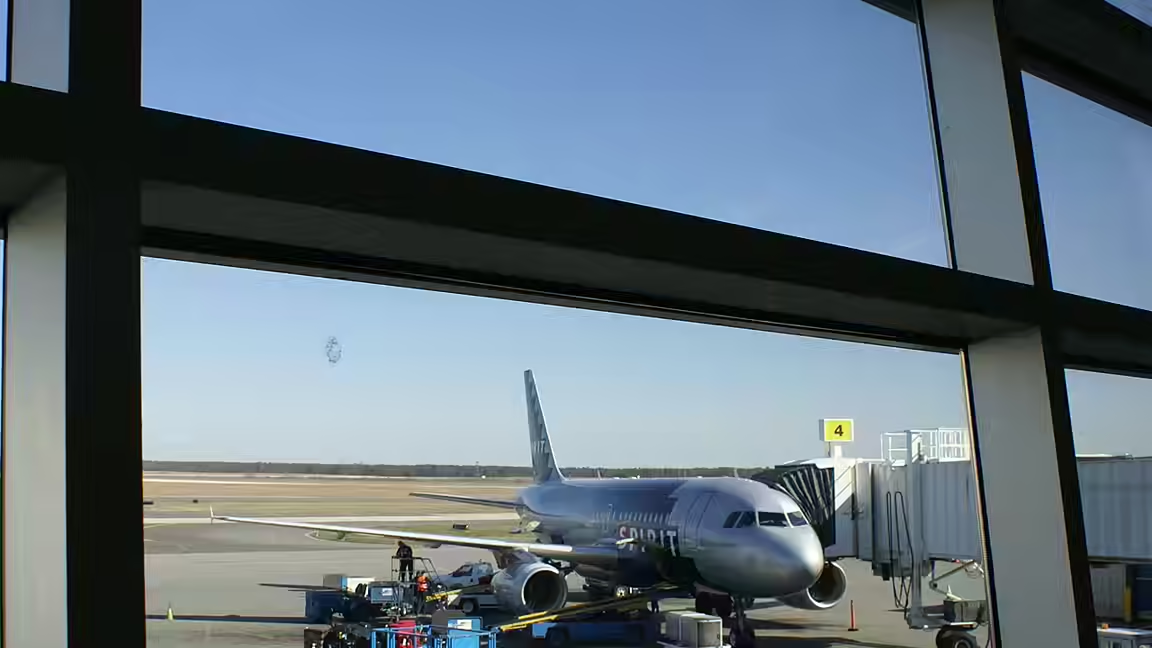
Iran resumed commercial flights from Tehran’s international airport on the event date, bringing regular passenger service back to the capital after a two-month wartime suspension.
The supplied Middle East Eye report says flights from the airport were scheduled to depart for Istanbul, Muscat and Medina. It also says the airport had not been handling such service since the war with the United States and Israel began two months earlier. That makes the reopening a significant marker in the gradual restoration of civilian air travel after the conflict.
The report adds that Iran had partially reopened its airspace earlier in the month during a ceasefire with the United States. Last week, officials also announced that Mashhad airport in the northeast would reopen on Monday. Tracking data seen on Friday showed at least two international flights leaving that airport for Turkey and Oman. Together, those details suggest a staged return of aviation activity rather than a sudden full reopening.
The airport in Tehran matters beyond the capital. It is one of the most important entry points for international travel into Iran, so the restart of flights is both symbolic and operationally important. It signals that the government believes some of the wartime risks that kept the airport shut have eased enough for scheduled passenger service to restart.
The supplied evidence does not say the conflict is over. It does not describe the ceasefire terms in detail, nor does it provide a full timeline for reopening all other Iranian airports. But it does show a country carefully restoring air links in phases: airspace first, then other airports, and now Tehran’s main international hub.
International aviation is often one of the first sectors to reflect a political or military shift. Airlines need permission, airspace access, and confidence that routes can be flown safely. Restarting service from Tehran suggests Iranian authorities are trying to normalize at least some civilian movement while the wider regional situation remains unsettled.
The route list itself is telling. Istanbul, Muscat and Medina are key regional destinations, covering both commercial and religious travel. Their inclusion indicates that the first reopened flights were not symbolic test routes but practical connections with immediate demand.
The supplied report is careful not to overclaim, and that caution should be preserved. What can be said with confidence is that Tehran’s main international airport reopened to commercial flights on the event date, that the restart came after a two-month wartime shutdown, and that Iran was already reopening other airports and airspace in steps before reaching this point.