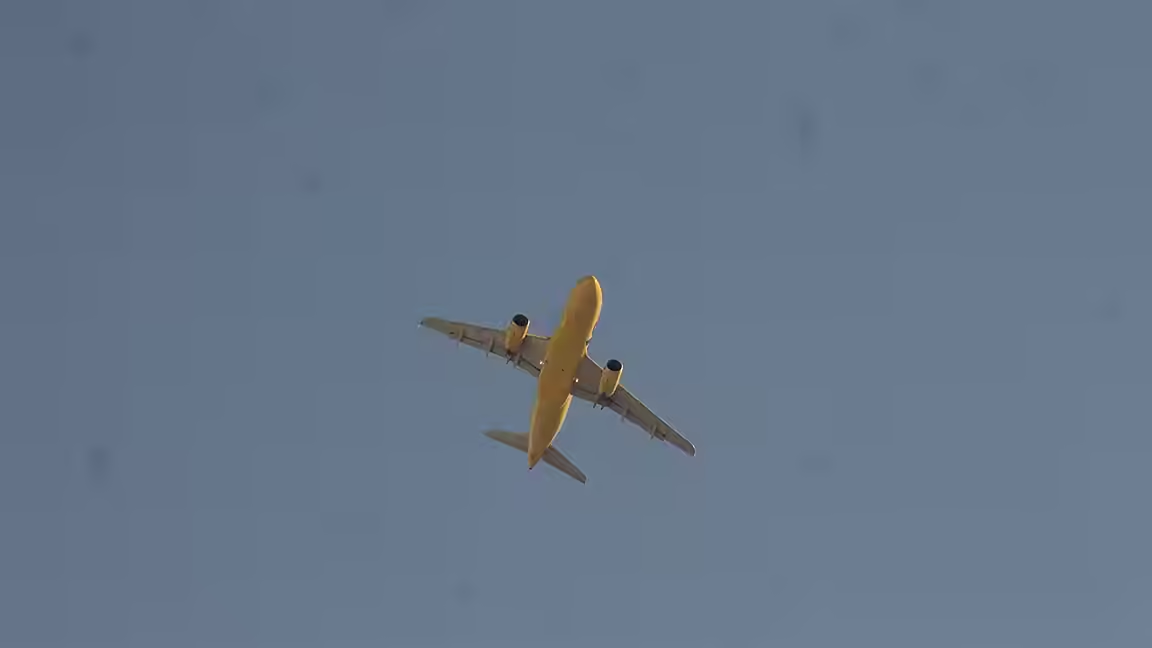
Spirit Airlines announced that it was going out of business after 34 years, cancelling all flights and beginning an immediate, orderly shutdown. The carrier said customer service was no longer available as passengers and employees learned of the decision early Saturday.
The ultra-low-cost airline said rising oil prices linked to the war with Iran had made continued operations impossible. Spirit was in bankruptcy proceedings for the second time in less than two years and had only days of available cash left, according to CBS News. The explanation about fuel costs was the company's assessment of its failure.
Negotiations over a proposed $500 million federal aid package stalled after bondholders objected to its terms. Trump administration officials had been told on Friday that the airline could stop operating within 24 hours. President Donald Trump said that day that his administration wanted to preserve jobs but would act only if it secured what he considered a good deal. No rescue agreement was reached.
Spirit had once operated hundreds of daily flights, serving more than 40 US cities as well as destinations in Central and South America. Its main hub was Fort Lauderdale-Hollywood International Airport. Industry analysts cited by CBS warned that the disappearance of a major discount competitor could lead to higher fares and force ticket holders to make new arrangements.
US Transportation Secretary Sean Duffy said a reserve fund would provide refunds to customers who bought tickets directly from Spirit. Travellers who used agents or other third-party sellers would need to seek repayment from those companies. Spirit advised customers that it would not rebook them on other airlines.
United, Delta, JetBlue and Southwest offered limited $200 one-way fares to passengers who could show a Spirit booking and proof of purchase, Duffy said. Other carriers also offered assistance to stranded Spirit employees and preferential consideration when they applied for jobs.
The airline said it was trying to return more than 1,300 crew members to their home bases. Its final flight travelled from Detroit Metropolitan Airport to Dallas Fort Worth International Airport. Some travellers still arrived at airports on Saturday because they had not heard about the shutdown, while employees described receiving little communication in the final days.
The May 2 announcement ended operations immediately. High fuel costs and failed bailout negotiations formed the central explanations in the supplied reporting, but the evidence did not provide a court finding assigning responsibility for the company's collapse.