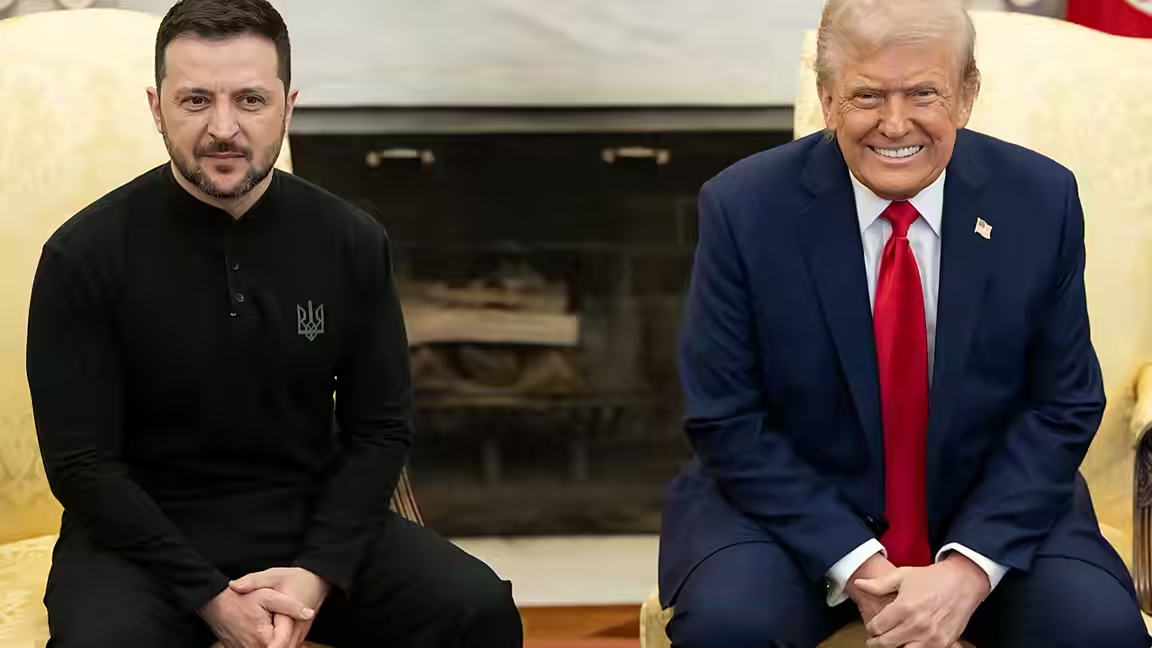
President Volodymyr Zelenskyy said on May 6, 2026, that Hungary had returned cash and gold seized from employees of Ukraine's state-owned Oschadbank, calling it an important step in relations between the two countries. The return closed one chapter of a dispute that began in March, when Hungarian authorities confiscated the assets from a convoy near Budapest and opened an investigation into suspected money laundering.
Euronews reported that the seizure involved $40 million, €35 million and 9 kilograms of gold. Hungary expelled seven Ukrainian nationals who were accompanying the transport the following day and kept the cash and gold while the case remained under investigation. Oschadbank and its lawyers said the vehicles were carrying out a routine transfer from Austria's Raiffeisen Bank to Oschadbank's headquarters in Kyiv, which is why the incident became such a diplomatic flashpoint almost immediately.
The argument was never only about the money. Ukrainian Foreign Minister Andrii Sybiha accused Hungary of kidnapping and state terrorism, while Hungarian Foreign Minister Péter Szijjártó suggested the funds could be linked to criminal activity and publicly raised the possibility that the convoy carried the money of a "war mafia." That language, combined with the detention and expulsions, hardened the dispute into a symbolic clash over trust, sovereignty and the treatment of Ukrainian institutions on Hungarian soil.
Outgoing Prime Minister Viktor Orbán had ordered the government to hold the assets for up to 60 days. His administration had already been in a confrontational relationship with Kyiv, regularly using Hungary's veto power to block financial support and delay Ukraine's EU ambitions. Yet the political context was shifting. Incoming premier Péter Magyar had offered to open a new chapter in bilateral relations, and the European Union had just approved a €90 billion loan for Ukraine after Hungary lifted its veto.
That broader backdrop helps explain why the return mattered. Zelenskyy framed it as a civilized step and thanked the Ukrainian team that fought for the decision. Hungary, for its part, was also moving through a change in leadership, and Magyar has signaled a less combative approach toward Brussels and neighboring countries. The asset return does not erase the March confiscation or the arguments around it, but it suggests that the relationship between Budapest and Kyiv may be entering a less openly hostile phase.
The timing mattered because the release of the assets came during a broader political reset in Hungary. Orbán had used his veto power to block assistance to Ukraine and to pressure Brussels, while incoming leader Péter Magyar signaled he wanted friendlier ties with both the European Union and neighboring states. In that setting, the return of the cash and gold reads as a practical decision with diplomatic symbolism: one side is trying to leave a fight behind, even if the underlying distrust remains.
Even so, the row is not resolved in any deep sense. The March seizure, the expulsions and the accusations are still part of the diplomatic record, and both sides will remember how quickly the issue escalated. What changed on May 6 was the immediate status of the money and gold, not the underlying mistrust that made the case so combustible in the first place.