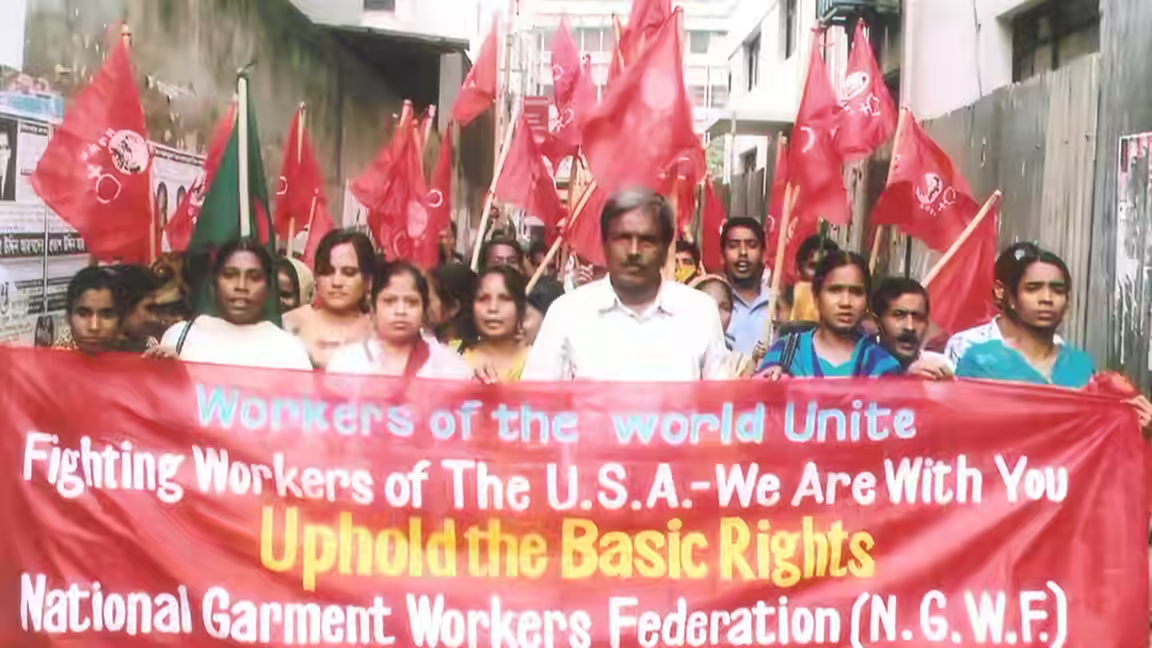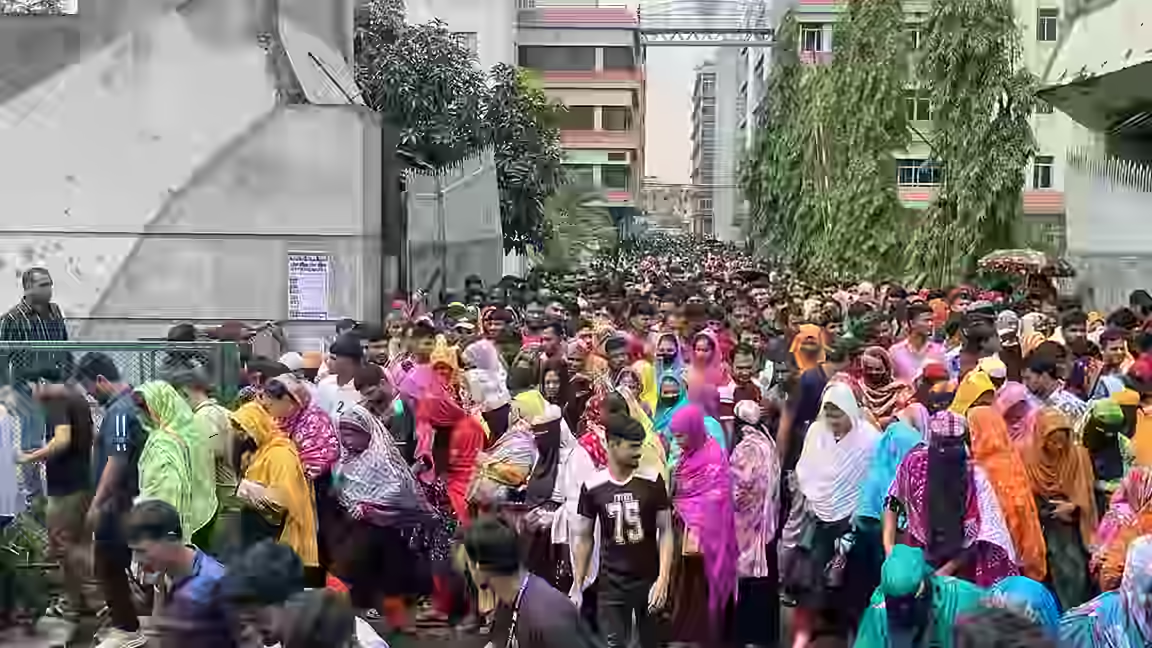
Garment workers protested across several industrial districts in Bangladesh on November 25 after a wage board set the sector’s minimum monthly pay at Tk17,000, a 36% increase from Tk12,500 that many demonstrators said remained inadequate. Workers blocked sections of the Dhaka–Tangail and Dhaka–Mymensingh highways in Gazipur and gathered in Savar, leading to clashes with police.
The Business Standard reported that police fired tear gas and sound grenades to clear protesters at several locations. Demonstrations began around 8:30 a.m. near the Bhogra Bypass and Naojor areas and were also reported in Tongi, Sreepur and Hemayetpur. Police said some protesters threw bricks and stones as officers moved to restore traffic. Road interruptions were intermittent, with blockages at individual points generally lasting 10 to 15 minutes during the morning.
Factory operations were disrupted across the main manufacturing belt. By noon, 60 garment factories in Savar and Ashulia had declared general holidays, according to the superintendent of Industrial Police-1. In Gazipur, officials said 20 factories had announced holidays by 10 a.m. and 35 remained closed indefinitely. Those figures describe overlapping categories and locations and should not be added as a single national total without further confirmation.
The unrest followed an overnight meeting of the six-member Minimum Wage Board. After almost 12 hours of talks failed to produce consensus, members held a secret ballot. Four supported Tk17,000 and two backed Tk18,000. The board also set monthly wages of Tk19,200 for Grade 3, Tk20,000 for Grade 2 and Tk21,500 for Grade 1 workers. The structure is expected to take effect on December 1 if approved by the Ministry of Labour and Employment, with the first salaries under it due in January.
Workers were divided over the result. Some regarded the Tk4,500 increase as worth accepting after weeks of closures and uncertainty. Others, including workers who had sought Tk30,000, said the new floor would not cover rising housing, food, transport and healthcare costs. A worker representative had proposed Tk18,000 during the board meeting, but that figure did not win a majority.
Security forces were reinforced in the affected districts. Border Guard Bangladesh deployed 18 platoons to Savar and Ashulia, another 18 to Gazipur and six to Narayanganj. In Hemayetpur, police reported arrests after a factory was vandalized; officials said they were checking the detainees’ identities and involvement before deciding on legal action.
The November 25 stoppages continued a period of labor disruption around the wage decision. The immediate dispute centered not on whether wages would rise, but on whether the approved increase matched living costs for workers in Bangladesh’s export-oriented garment industry.